




How the Belt and Road Initiative Revived Interest in Silk Road Travel
The Silk Road was once the world's most important trade route. For centuries, it connected China with Central Asia, the Middle East, and Europe. Trade, culture, and ideas moved across these routes and shaped entire civilizations. Over time, modern transport and changing borders reduced its importance, and many Silk Road cities slowly lost global attention.
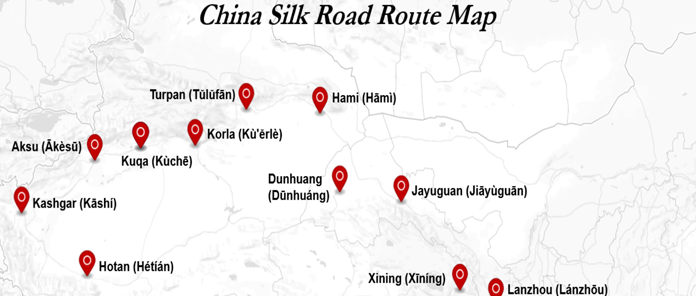
It changed in 2013 with the launch of China's Belt and Road Initiative. Investment in infrastructure and transport brought a new focus to these historic regions. Tourism also started growing again. Today, travelers are once again exploring places like Kashgar, Dunhuang, and the ancient Silk Road corridors through journeys such as the Silk Road Express.
What Is the Belt and Road Initiative?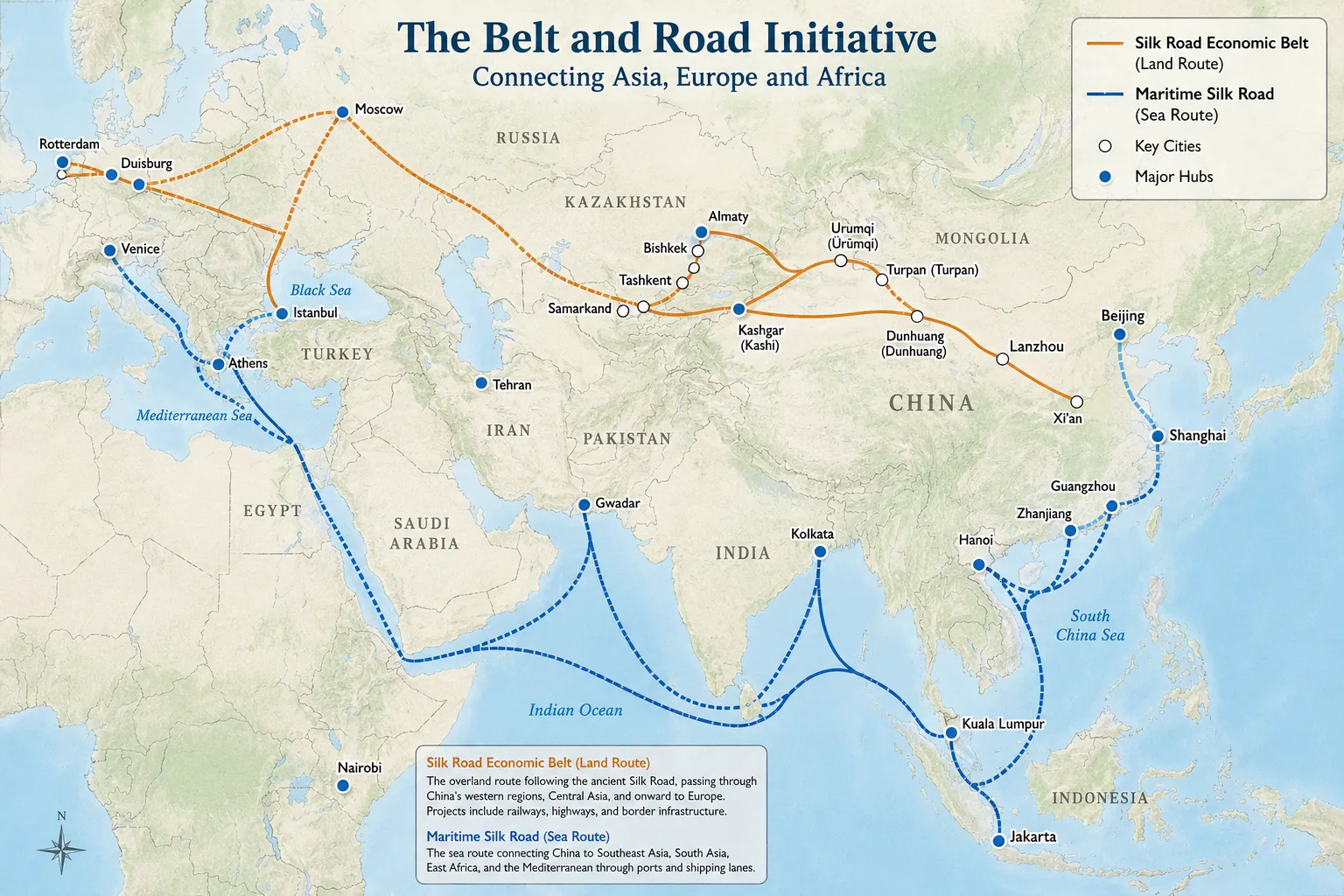
The Belt and Road Initiative is a large-scale infrastructure and economic development program launched by China in 2013. Its stated goal is to improve trade connectivity among China, Asia, Africa, Europe, and beyond by investing in roads, railways, ports, pipelines, and digital infrastructure.
The initiative has two main components. The first is the Silk Road Economic Belt, which focuses on overland routes across Central Asia and into Europe. The second is the Maritime Silk Road, which focuses on sea routes connecting China to Southeast Asia, South Asia, East Africa, and the Mediterranean.
The Silk Road Economic Belt follows the ancient Silk Road. It passes through Xinjiang, into Central Asia, and westward toward Europe. Infrastructure projects under this component include railway upgrades, highway construction, and improvements to border facilities across the entire corridor.
The scale of the initiative is enormous. It involves dozens of countries and hundreds of individual projects. For Silk Road travel specifically, the most relevant impact is the improvement of transport infrastructure within China's western regions and across the Central Asian corridor.
What Was the Ancient Silk Road?
The ancient Silk Road was not a single road. It was a network of overland and maritime trade routes connecting China to the rest of the known world for over a thousand years. Chinese silk, porcelain, and spices moved westward. Gold, glass, and silver moved eastward. More importantly, ideas, religions, and technologies traveled in both directions. Buddhism entered China along the Silk Road. Islam spread into Central Asia in the same way.
Cities along the route became some of the most important in the ancient world. Kashgar was a major junction where the northern and southern branches of the Silk Road met. Dunhuang was the last major Chinese city before the desert crossing to Central Asia. The Silk Road declined as maritime trade routes developed. Ships carried more goods more cheaply than camel caravans crossing deserts and mountain passes. By the 16th century, the Silk Road as an active trade system had effectively ended.
How the Belt and Road Initiative Increased Interest in Silk Road Travel
The Belt and Road Initiative created interest in Silk Road travel through three connected effects. It improved physical infrastructure. It increased global media coverage of the regions involved. And it triggered a broader cultural curiosity about the ancient routes that the initiative explicitly referenced in its name and branding.
Improved Rail and Road Connectivity
The most direct impact on Silk Road tourism came from infrastructure improvements in western China. Railway lines connecting eastern China to Xinjiang were upgraded and expanded. The high-speed rail network extended further into Gansu and toward Xinjiang's major cities. Road construction improved access to remote areas along the ancient route.
For travelers, this meant that destinations like Dunhuang, Hami, Turpan, and Kashgar became significantly easier to reach. Journeys that previously required multiple days of difficult travel became manageable multi-day train trips with comfortable connections. The Hexi Corridor in Gansu, which closely follows the ancient Silk Road, became accessible by modern rail for the first time.
Growth of Cultural Tourism
As infrastructure improved, a particular type of traveler started paying attention. Cultural tourists seeking historical depth rather than beach resorts or theme parks found the Silk Road regions genuinely compelling. The combination of ancient ruins, UNESCO sites, living cultural traditions, and dramatic landscapes offered something that mainstream Asian destinations could not.
Demand for immersive, historically grounded travel experiences grew globally through the 2010s and 2020s. The Silk Road regions fit this demand precisely. Travelers could walk through a 2,000-year-old city in Turpan, visit Buddhist cave temples at Dunhuang, eat in a Uyghur market in Kashgar, and cross the same mountain passes that caravans used for centuries. The experience was not reconstructed for tourism. It was simply there.
Rise of Luxury and Scenic Train Travel
Alongside the growth of cultural tourism, a market for train travel through historically significant landscapes emerged. The concept of combining the comfort of high-quality train travel with the depth of Silk Road destinations proved attractive to experienced travelers who had already visited mainstream destinations.
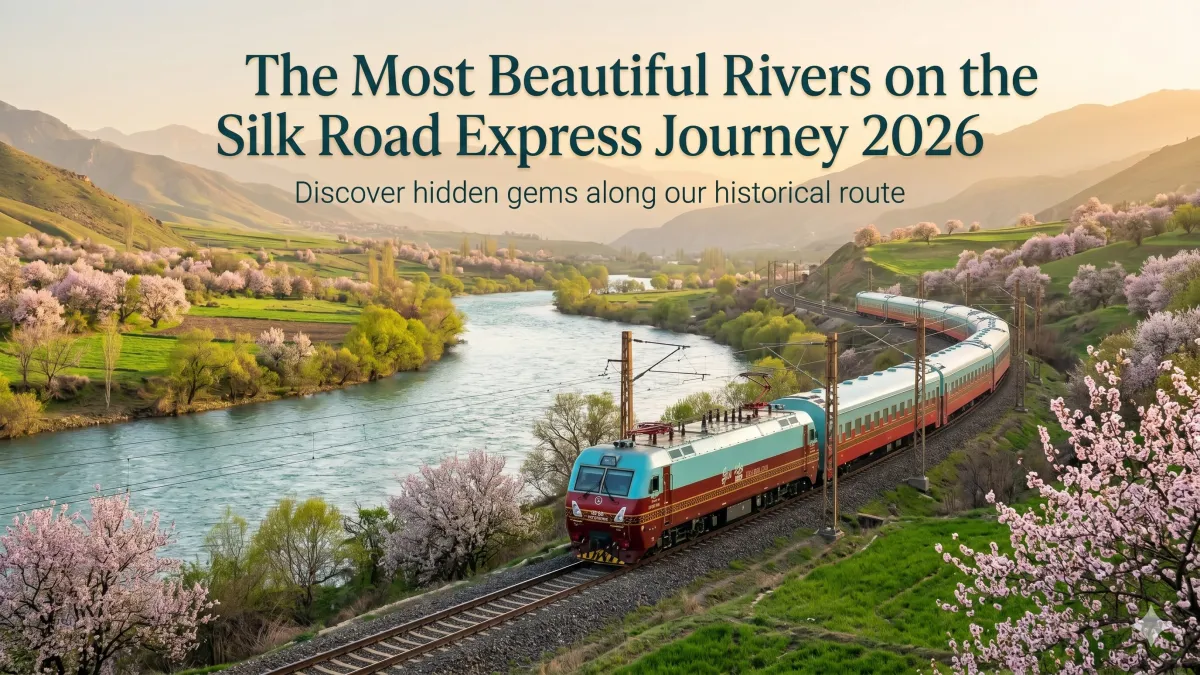
The Silk Road Express represents this luxury concept directly. It offers a modern train experience through the exact corridor that the ancient Silk Road followed. Rail travel through Gansu and Xinjiang, combined with off-train excursions to desert landscapes, mountain viewpoints, ancient cities, and cultural sites, creates a journey format that matches what the most sophisticated travelers are looking for. The Belt and Road Initiative created the infrastructure conditions that made this kind of travel experience possible and practical.
Key Silk Road Destinations Benefiting from Tourism Growth
Kaishi(Kashgar)
Kashgar is the most historically significant city on the Chinese section of the Silk Road. Its Old City contains traditional Uyghur architecture that has changed little over the centuries. The Id Kah Mosque is the largest in China. The Sunday Bazaar remains one of the largest traditional markets in Central Asia. Kashgar also serves as the gateway to the Pamir Plateau and the Karakoram Highway, offering travelers access to high-mountain landscapes beyond the desert corridor.
Dunhuang
Dunhuang includes the Mogao Caves, a UNESCO World Heritage Site with 492 cave temples featuring Buddhist murals and sculptures dating from the 4th to the 14th centuries. The site is one of the most important collections of Buddhist art anywhere in the world. The Mingsha Shan dunes and Crescent Lake outside the city add dramatic desert scenery to the historical depth. Dunhuang is a city where history is not behind glass. It is in the landscape around you.
Xining
Xining is the capital of Qinghai Province and the eastern gateway to the Tibetan Plateau. It has a distinctive cultural character, shaped by the coexistence of Tibetan Buddhist and Hui Muslim traditions. The Kumbum Monastery, outside the city, is one of the most important Tibetan Buddhist monasteries outside Tibet. The food culture in Xining reflects this cultural mix in ways that reward curious travelers.
Hami
Hami is the eastern gateway into Xinjiang and a key stop on the Gobi Desert corridor. The Dahaidao Yardang Scenic Area, located outside Hami, is one of the most unusual desert landscapes in China. Notably, it features the country's only legally accessible route through an uninhabited region (无人区), offering an unparalleled sense of wild adventure. Wind-eroded rock formations create a terrain that looks unlike anything else along the route. Hami also produces the famous Hami melon, which has been traded along the Silk Road since the Tang Dynasty.
Why Travelers Are Interested in Silk Road Travel Again
The renewed interest in Silk Road travel comes from a combination of factors that align well with current travel preferences:
● Less Crowded Than Mainstream Destinations: The Great Wall, the Forbidden City, and Zhangjiajie receive millions of visitors each year. The Silk Road regions receive a fraction of that number. Travelers who want significant historical sites without enormous crowds find the Silk Road compelling.
● Exceptional Diversity of Landscapes: On a single journey, travelers traverse rocky desert plains, dune landscapes, high mountain plateaus, alpine lakes, ancient oasis cities, and Tibetan Plateau terrain. No comparable route in Asia offers this range of scenery in such close sequence.
● Genuine and Layered Historical Storytelling: Every city along the Silk Road has a centuries-old history that has shaped the world beyond its borders. Dunhuang's caves contain manus that rewrote our understanding of medieval Asian history. Kashgar's markets have operated continuously since the Tang Dynasty. That depth of historical presence is rare and increasingly valued by experienced travelers.
How the Silk Road Express Reflects Modern Silk Road Tourism
The Silk Road Express Luxury Routes-Train Of Glamour is a direct expression of modern Silk Road tourism. It combines the comfort and logistics of organized luxury train travel with the depth of the Silk Road route. Travelers do not need to arrange multiple transport connections, permits, and accommodation independently across remote regions. The train handles the logistics while delivering the landscape and the history.
The route passes directly through the Belt and Road corridor. Gansu, Xinjiang, and Qinghai are regions where Belt and Road infrastructure investments have improved access and facilities for travelers. The excursions at each stop bring travelers into direct contact with the historical and natural features that make the route significant.
The train format also suits the scale of the journey. The distances between Silk Road destinations are large. Covering them by train rather than by air keeps the traveler connected to the landscape rather than jumping between airports and city centers. The desert and mountain scenery visible from the train is part of the experience, not just the time between stops.
Challenges Facing Silk Road Tourism
Silk Road travel comes with real challenges to plan for:
● Remote Geography: Western China is far from international arrival points, with long journey times between stops.
● Seasonal Weather: Summer temperatures exceed 40°C in desert regions. Winter makes some routes inaccessible.
● Narrow Travel Window: Spring and autumn are the only truly comfortable seasons for this route.
● Permit Requirements: Some areas in Xinjiang near border regions require advance permit arrangements.
● Logistics Complexity: Remote accommodation and transport require careful planning, especially for independent travelers.
Is Silk Road Travel Worth It Today?
Silk Road travel suits three types of travelers. Cultural travelers who prioritize historical depth will find the route genuinely rewarding. The history is real, layered, and present in the landscape rather than just in museums. Landscape photographers will find exceptional material across the entire route. Desert formations, alpine lakes, mountain reflections, and ancient city architecture all offer world-class opportunities in uncrowded conditions.
Luxury train enthusiasts who want historical and geographical significance alongside comfort will find the Silk Road Express format compelling. For all three, the experience is measured in depth rather than speed. The Silk Road is not a destination you rush through.
Conclusion
The Belt and Road Initiative did not rebuild the Silk Road. It renewed the world's attention toward the regions the ancient route passed through. Better infrastructure made western China accessible. Cultural curiosity did the rest.
The Silk Road Express takes travelers through the exact corridor that shaped Asian history for over a thousand years. The landscapes are real. The history is genuine. The access has never been easier. The Silk Road is no longer just a chapter in history. For modern travelers, it has become a journey they can experience again.
FAQs
What is the Belt and Road Initiative?
A large-scale infrastructure program launched by China in 2013 to improve trade and transport connectivity across Asia, Africa, and Europe.
How did the Belt and Road Initiative affect tourism?
It improved transport infrastructure across western China, making Silk Road destinations more accessible and increasing global awareness of the regions along the route.
What is the connection between Belt and Road and the Silk Road?
The initiative explicitly references the ancient Silk Road. Its Silk Road Economic Belt component follows the overland route through Central Asia toward Europe.
Can you travel the Silk Road today?
Yes. Kashgar, Dunhuang, Hami, Turpan, and Xining are all reachable by modern rail. The Silk Road Express offers an organized luxury train journey through the most historically significant section of the route.