




China Travel Dilemmas: Why You Can't See All of China in Two Weeks
You look at a map and spot the Great Wall in Beijing and the skyline of Shanghai. Then your eyes wander west to the deserts of the Silk Road. It seems possible to fit it all into 14 days.
This is the classic Travel-to-China mistake.
China isn’t like Europe; it’s as big as a continent. If you try to visit the North, South, and West in one trip, you’ll spend more time in airport lines than at the sights. You’ll come home tired instead of inspired.
This guide addresses the problem of over-scheduling. Before we get to solutions, let’s look at why China needs a different travel approach. We’ll explain why it’s best to focus on one area, highlight what makes Gansu Province special, and introduce the idea of slow travel.
The Geography Trap: Understanding Scale
Many travelers don’t realize how large the western provinces are. They think of cities as if they’re just a subway ride apart, not understanding that traveling in China means covering huge distances.
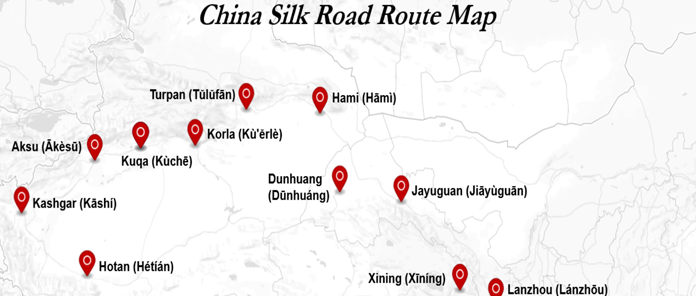
Take Gansu Province as an example. On the map, it looks like a narrow strip, but in reality, the Hexi Corridor stretches over 1,000 kilometers—the same distance as from London to Berlin.
If you try to add this huge region to a trip that also includes Hong Kong or Chengdu, you’ll cross different time and climate zones. You’ll lose whole days to travel and miss out on the details of the culture because you’re always in a rush.
The Logistics Nightmare: Domestic Flight Fatigue
Most two-week trips include four or five domestic flights, which often leads to what’s called domestic flight fatigue.
Here is the reality of a "fast" itinerary:
1. Wake up at 5:00 AM.
2. Taxi to the airport in traffic.
3. Arrive 2 hours early for security (standard China Travel Advisory protocol).
4. Wait for a delayed flight (airspace is often crowded).
5. Fly 3 hours.
6. Taxi to a new hotel.
7. Unpack.
By the time you arrive at a site, you’re already tired. Visiting becomes just another item to check off, not a real experience. Real luxury is being present, not just pushing through. It’s hard to enjoy a peaceful temple when you’re still thinking about your next flight.
The Solution: The Single-Corridor Strategy
To avoid this problem, change your approach. Don’t try to see everything. Pick one main route and explore it in depth.
If you love history, the Silk Road is the best single route to follow. It has a natural flow, moving from east to west along the path of the old trade winds.
Instead of hopping from place to place, you follow a set path. You begin in Xining, experience the wide-open Qinghai Lake, travel through Gansu Province, and finish at the Mogao Grottoes.
This straightforward route helps you save energy. Each stop leads naturally to the next, and the history reveals itself step by step. You’re not just sightseeing—you’re following the path of a whole civilization.
Why Gansu Province Requires Time
Gansu Province is the highlight of the Silk Road. It’s not somewhere you can see in a day. Here, the landscape shapes the history.
● The landscape changes from snowy mountains to red sandstone cliffs. You’ll see the Yellow River give way to the Gobi Desert.
● This is where Buddhism first entered China. The cave art here took centuries to make, and you need time to really take it in.
● The food changes every 200 kilometers. Take your time to sit in local noodle shops and notice the differences.
If you rush through Gansu, you’ll only see rocks. If you slow down, you’ll notice the Hexi Corridor was once the heart of an empire.
The Art of the 'Train Cruise'
So how can you travel 1,000 kilometers without getting tired? Stop flying and start taking the train. Not just any train, but a true ‘Train Cruise’.
This is the answer to stress over itinerary planning.
● Think of it as a moving hotel: you only unpack once, and your room goes with you. You can sleep in Qinghai and wake up in Gansu, turning travel time into relaxation.
● On a plane, you only see clouds. On a train, you watch the scenery change—green grasslands slowly turn into golden dunes. You understand the land because you see it unfold before you.
● There’s no wasted time—no security lines or taxi rides to hotels. The train station is your starting point, so you can make the most of every hour of your trip.
Focusing on Qinghai Lake and Beyond
If your schedule is too full, you’ll only have a quick stop at Qinghai Lake. Try not to make this mistake. It’s the largest lake in China and is very important to Tibetans.
With slow travel, you have time to visit temples, walk along the lake, and get used to the altitude.
A good Silk Road itinerary gives you time to enjoy this area and helps you get ready for the deserts ahead.
Conclusion: Depth Over Breadth
The best advice for traveling in China is to do less.
Don’t visit China just to rush through it. Come to really understand the place. Two weeks can be amazing if you focus on one route.
ChoosPick the Gansu Province route and let the Silk Road guide you. Skip the flight fatigue and choose train travel. When you slow down, you’ll really start to see what makes this journey special.Expert Recommendations for Luxury Rail Travel
Are yAre you planning to travel along the Silk Road? Do you want to see the wide-open western landscapes without getting worn out by daily flights?recommend avoiding the standard "rush" tour. Choose a travel style that respects the distance. A specialized luxury rail service allows you to cruise through the Hexi Corridor in total comfort.
Train of Glamour: Travel in comfort without compromise.
Check out our recommended custom China rail trips to see how we link Qinghai Lake and Gansu Province for a smooth, relaxing journey. Visit our website to see route maps and suite choices, and start planning your luxury Silk Road adventure.
[https://www.glamourtrains.com/en]
FAQs:
Is two weeks really enough for Gansu Province?
Yes, if you focus solely on this region. A 10 to 14-day trip allows you to explore the Hexi Corridor, Dunhuang, and Qinghai Lake at a relaxed pace. This is far better than spending just 2 days there as part of a larger tour.
Why is Slow travel better for the Silk Road?
The altitude and the climate change rapidly. Slow travel allows your body to adjust. It also lets you appreciate the subtle changes in culture as you move west. Rushing this route often leads to physical exhaustion.
Does the China Travel Advisory recommend trains over planes?
For domestic travel, trains are often more reliable. Chinese airspace suffers from frequent weather and military delays. High-speed and luxury trains run on a stricter schedule, making them a smarter choice for itinerary planning.
Can I see the Silk Road Map highlights in winter?
Yes. Winter is actually a fantastic time to visit Gansu Province. The crowds are gone. The snow on the dunes is magical. A luxury train provides the warmth and logistics needed to make winter travel comfortable.
Is travelling by train through China safe for foreigners?
Absolutely. China's rail network is one of the safest in the world. Security is tight but efficient. On a private luxury train, you have the added layer of private security and 24-hour staff support.