




Hami Yardang Landforms: A Unique Stop on the Silk Road Express Journey
The Hami Yardang landforms stretch across the Gobi Desert in eastern Xinjiang. Over millions of years, strong winds have shaped these rocks into forms resembling castles, whales, and ancient ruins. This area was once part of the Silk Road, where traders moved through the same remote corridor. Today, it stands as one of the most raw and untouched landscapes in China, offering a completely different travel experience.
Hami Yardang Landforms
Most travellers fly past Hami. They head straight to Urumqi, Turpan, or Kashgar. That is a mistake. Hami sits at the eastern gateway of Xinjiang. It is where the Gobi Desert meets the Silk Road. And just outside the city, one of the most dramatic landscapes in China waits in near silence.
The Hami Dahaidao Scenic Area has China's only legal route for driving through an uninhabited area. Wind-carved rock towers. Prehistoric fossils. A desert that looks like another planet. Ancient trade routes running underneath your wheels.
This is not a standard tourist stop. It requires planning, the right vehicle, and respect for the terrain. But for travellers who make the effort, it delivers something that polished attractions cannot.
What Are Yardang Landforms?
A Yardang is a wind-eroded rock formation. Over millions of years, desert winds strip away soft rock and soil. The harder rock stays. The result is a field of irregular towers, ridges, and formations rising from flat desert ground.
The Hami Yardang landform stretches over 400 kilometers across the Gobi Desert. Elevations shifts from 700 meters above sea level to below it, forming what scientists call a geological textbook of landforms.
The shapes are not subtle. Some formations look like castle walls. Others look like giant whales. Some resemble ancient temples. The light changes everything. In the morning, the rocks glow orange. At midday, they turn pale and harsh. At sunset, they go deep red.
How does Hami compare to other Yardangs in China?
Dunhuang is home to the most well-known Yardang geopark. It is organised, accessible, and popular. Wuerhe Ghost City near Karamay is dramatic and atmospheric. But Hami's Dahaidao is different. It is wilder. Less visited. The terrain is more varied. And it sits directly on the ancient Silk Road corridor, which adds a historical layer that the others cannot match.
The Dahaidao Scenic Area
What Is Dahaidao?
Dahaidao means “Great Desert Road.” The name comes from a Tang Dynasty manu found in Dunhuang called the Xizhou Tujing. The Dahaidao stretches over 500 kilometers from Dunhuang to Turpan via Hami. It was the shortest ancient route connecting these three cities and was in active use from the Han Dynasty until the Tang Dynasty, when it gradually fell out of official use.
Silk Road traders, soldiers, and monks all passed through here. Beacon towers and ancient post stations still sit in the desert. You can see them from the road.
Today, the route has been partially reopened as a managed scenic area. Along the route, travelers can see ancient castles, beacon towers, post stations, prehistoric human habitation sites, fossil mountains, mirages, wild camel herds, and rare geographical formations.
The Silk Road Connection
This was not just a trade road. It was a survival route. The terrain is brutal. Water is scarce. Temperatures swing from extreme cold to extreme heat within hours. Travelers who got it wrong did not make it through.
Hami serves as a key Silk Road gateway with over 2,000 years of history. Ancient beacon towers and city ruins still mark the route. Standing next to them in the desert gives you a clear sense of what this journey cost.
The Pterosaur Connection
This is where Dahaidao truly shines. Professor Wang Xiaolin from the Institute of Vertebrate Paleontology and Paleoanthropology at the Chinese Academy of Sciences uncovered the Hami Pterosaur Fauna here, including tens of thousands of male and female pterosaurs, as well as pterosaur eggs and embryos.
The Hami Pterosaur-Yardang National Geopark holds the largest concentration of pterosaur fossils anywhere in the world. A dedicated pterosaur museum is currently under construction on-site.
This is not a theme park display. The fossils are in the rock around you as you drive. The landscape that looks alien today was, in fact, a prehistoric wetland millions of years ago.
Key Attractions Inside Dahaidao
Pterosaur Grand Canyon
A 20-kilometer canyon with 55 sharp turns. Driving through it feels like navigating a gigantic maze, with vast cliffs on either side. Take it slow. Stop and look up. The scale of the walls is hard to process from a moving vehicle.
Hongliu Beach (Hongliutan)
This is the main visitor hub inside the scenic area. If you are doing a two-day trip, this is where you spend the first night. There are camping facilities and basic services here. The Dahaidao scenic area now offers smart guided tours and camping facilities. Stock up in Hami City before you arrive. Options on-site are limited.
Mars Camp
The most photographed spot in Dahaidao. The rock formations here have an unusual red-orange tone. The flat open ground around them adds to the effect. The Tongtian Cave at sunset shows a pink-purple Martian effect. The Yardang formations 3 km north of Mars Base look like an interstellar battlefield. Go at dusk. The light is worth the timing.
Skull Valley
An eerie and fascinating spot that showcases rare fossil-rich areas. The name is deive, not decorative. It is a distinct section of the route with a different atmosphere from the rest of the canyon.
Tongtian Cave and Echo Wall
Two sites that reward visitors who walk, not just drive. Tongtian Cave is best at sunset when the light hits the interior walls. Echo Wall does what the name says. Bring patience and quiet.
Stargazing
The Pterosaur-Yardang Dahaidao Scenic Area offers ideal conditions for stargazing and astrophotography, with vast flat desert rock formations and minimal light pollution. If you stay overnight, this is a reason to do it. The Milky Way above the Yardang formations is one of the clearest night sky experiences in China.
How to Get to Hami
By Air
Hami has its own airport with connections to Urumqi and other cities in Xinjiang. This is the fastest option.
By High-Speed Rail
The Silk Road Express Luxury Routes-Train Of Glamourtrain route runs through Hami, making it a natural stop between Dunhuang and Turpan or Urumqi.
By Self-Drive
The classic Silk Road self-drive runs from Dunhuang to Hami to Turpan. This is the best way to see the full transition of the landscape. Desert changes character as you move west.
Fitting Hami into a Silk Road Itinerary
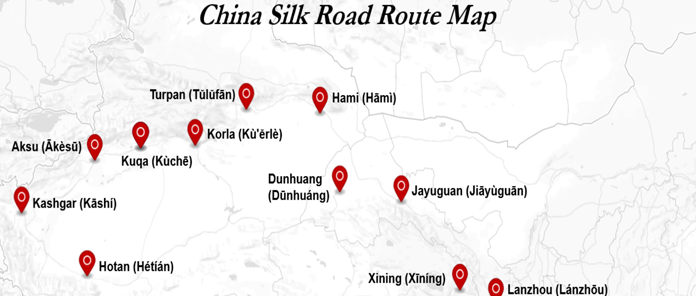
The classic route runs: Dunhuang → Hami → Turpan → Urumqi
Hami naturally sits in the middle of the eastern stretch of the Xinjiang Silk Road. Two to three days is enough to cover Dahaidao, the King's Palace, and Wubao Ghost City.
The Silk Road Express train now makes Hami accessible without a car for the inter-city legs. You can take the train between cities and rent a vehicle locally for Dahaidao.
For a broader itinerary, Hami connects well with Turpan's Flaming Mountains and ancient ruins to the west, and Dunhuang's Mogao Caves and dunes to the east.
Getting Around Inside Dahaidao
Vehicle Requirements
This is non-negotiable. For remote areas like Dahaidao, rent an SUV or 4WD. Download offline maps as cell service is poor in some zones. Standard sedans cannot handle the terrain in large sections of the park. RVs face additional restrictions.
One practical note: RVs can only enter and exit from the east gate. Exiting the north gate, there is a 2.2-meter height limit along a long section of road, making it impossible to pass.
East Gate vs. North Gate
If your next stop after Dahaidao is Hami City, exit from the east gate. If you are continuing to Turpan, exit from the north gate. Plan this before you enter. Getting it wrong means backtracking through rough terrain.
Tour Group vs. Self-Drive
Self-driving gives you control and flexibility. But the terrain is disorienting. It is easy to get lost in the scenic area. It is recommended not to enter alone. Going in groups is safer. If you have no experience with desert driving, join a guided tour from Hami. They cover the logistics and keep you on track. The scenic area takes 5 to 6 hours to drive through properly. Do not try to rush it.
Best Time to Visit Hami Yardang
The best time to visit is Spring and Autumn (April to June, September to October). Comfortable weather. Good light for photography. Rock colors look more vivid.
Hami City: What Else to See
Hami is worth at least two to three days, not just as a base for Dahaidao.
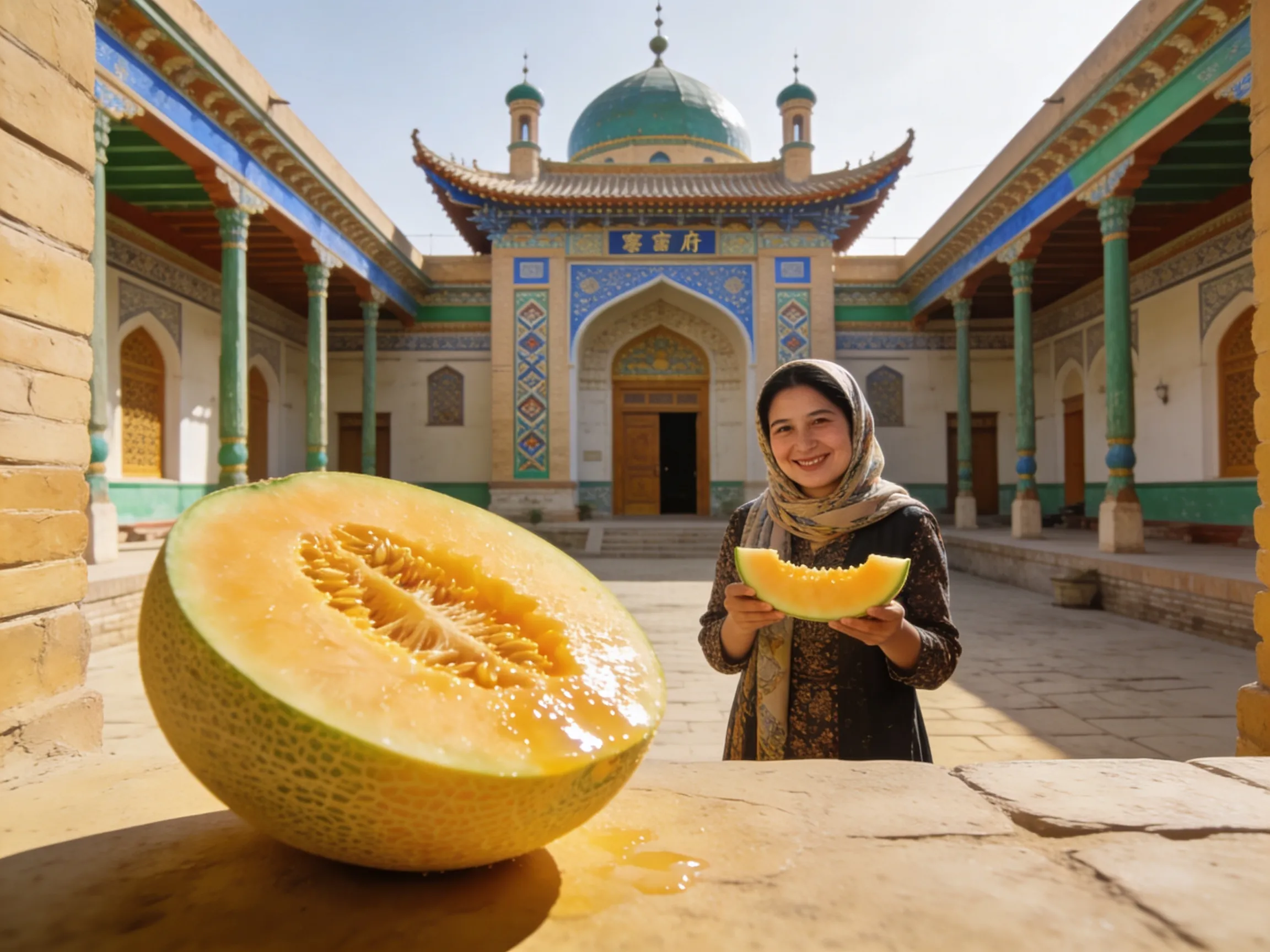
Hami King’s Palace: The palace was the residence of the local Uyghur princes of Hami during the Qing Dynasty. Its construction began in the 45th year of Emperor Kangxi’s reign and was later renovated and expanded by nine generations of Hami kings. The architecture blends classical Islamic design with traditional Han Chinese aesthetics, making it the largest and most distinctive palatial complex in Xinjiang.
Wubao Ghost City: A smaller, less visited Yardang formation closer to Hami City. Less commercial than the well-known Urho Ghost City, Hami’s Wubao Ghost City is wild and raw. At sunset, the scene turns surreal. Go here before or after Dahaidao.
Hami Melon: Hami melons are famous across China. The city's long hours of sunshine and dry heat produce a melon with unusual sweetness. Buy them fresh from roadside stalls, not packaged. The difference is significant.
Aletun Ancient Street: Good for an evening walk, local food, and picking up dried fruit and local produce to take on the road.
FAQs
How far is Dahaidao from Hami City?
The east gate sits in Wubao Town. The drive from Hami City takes about 1 to 2 hours.
What fossils are found in Hami?
The area holds one of the world’s largest concentrations of pterosaur fossils, including eggs and embryos. A dedicated museum is under construction on site.
Is Hami Yardang better than Dunhuang Yardang?
Different experience. Dunhuang is more organized and accessible. Hami is wilder and less crowded. For serious travelers, Hami wins.
What is the best time to visit Hami Yardang?
April to June and September to October. In summer, begin at sunrise — midday surface temperatures exceed 70°C.