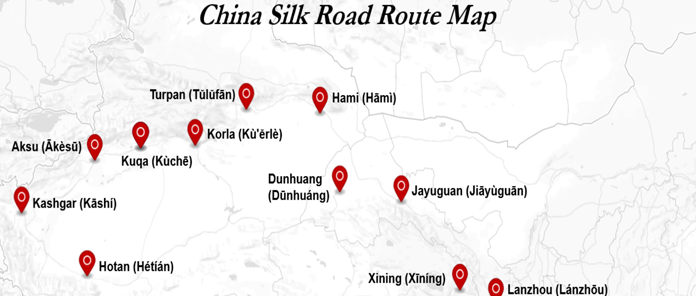





Kanas Three Bays: A Different Side of Xinjiang Beyond the Silk Road
Most people who visit Xinjiang expect deserts. They expect Silk Road cities, ancient ruins, and flat, dry landscapes. Northern Xinjiang has a completely different story to tell.
Kanas is one of the most beautiful natural areas in China. Few international travelers know it exists. The Three Bays within the Kanas Scenic Area are its most photographed feature. Three separate river bends, each with a distinct shape and character, sit inside a landscape of dense forest, clear water, and mountain air that looks nothing like the Xinjiang most people picture.
This guide covers what the Three Bays are, where they sit, what to do there, and when to visit.
What Are the Kansas Three Bays?
The Kanas Scenic Area is a large protected natural reserve in northern Xinjiang. It contains forests, wetlands, alpine lakes, and the Kanas River running through its center. The Three Bays are three distinct meanders of the Kanas River that have become the defining natural attractions of the entire reserve.
Each bay has a different shape, atmosphere, and reason to visit. Together they form a short but exceptionally scenic route through the heart of the reserve. They rank consistently among the most photographed landscapes in northwest China.
Where Are the Kanas Three Bays Located?
The Three Bays are located within the Kanas Nature Reserve in Altay Prefecture, northern Xinjiang. The reserve borders Russia, Mongolia, and Kazakhstan. This remote position gives the landscape a Central Asian and Siberian character, unlike anywhere else in China.
The nearest major city is Altay City, approximately 250 kilometers away. Most travelers fly into Kanas Airport and reach the scenic area by road within an hour. The Three Bays are accessible on foot from boardwalk access points along a single route inside the reserve.
Why Kanas Three Bays Feels Different from the Rest of Xinjiang
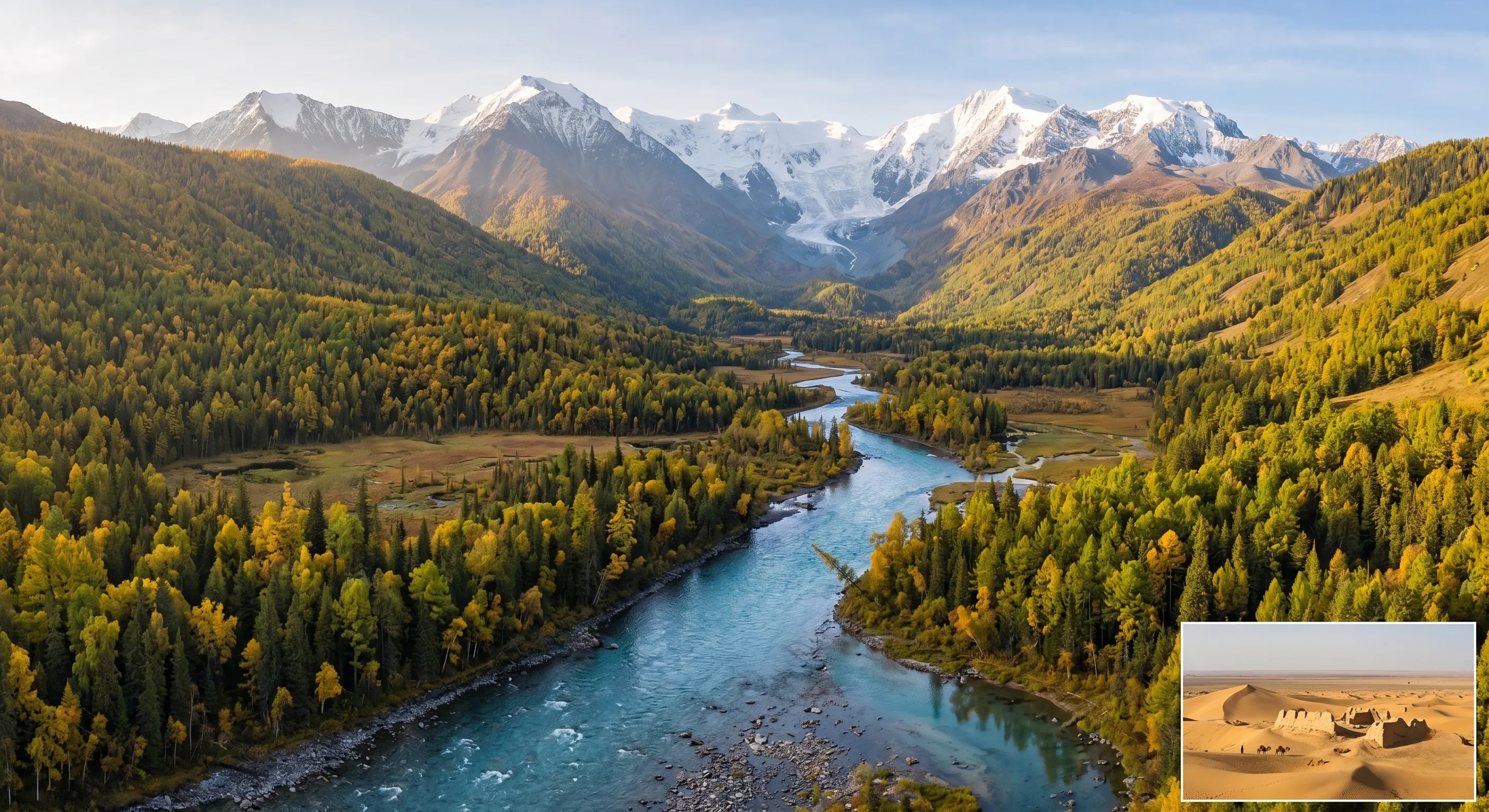
Forests Instead of Deserts
The Gobi and Taklamakan deserts define most people’s image of Xinjiang. Kanas is the opposite. Dense forests of Siberian pine, spruce, birch, and larch cover the mountain slopes completely. After the open desert landscapes of the Silk Road route, arriving in these forests feels like entering a different world entirely.
Rivers Instead of Oasis Towns
Silk Road oasis towns exist because underground water makes limited agriculture possible in hostile desert terrain. Kanas has the opposite relationship with water. The Kanas River flows strongly and clearly through the reserve. Wetlands spread across the valley floor. Water here defines the entire landscape rather than being scarce within it.
Mountains Instead of Ancient Ruins
The Silk Road route is rich with historical depth. Kanas offers something completely different. There is no history to study here. There is only landscape. The Altai Mountains form the backdrop of the entire reserve. Snow sits on the higher peaks even in summer. The scale is difficult to process until you are standing inside it.
The Three Bays Explained
Immortal Bay (Shenxian Bay)
Immortal Bay is the wetland section of the route. The Kanas River spreads across a flat valley floor, its waters flowing through reeds, grasses, and shallow water channels. Morning mist rises from the wetland surface in autumn, creating conditions that photographers specifically travel to Kanas to capture.
The best viewpoint is from the elevated observation platform above the valley. The mist effect at sunrise is most reliable in September and October. Arrive before dawn for the best results.
Moon Bay (Yueliang Bay)
Moon Bay is the most famous of the three. The Kanas River bends in a near-perfect crescent shape here. From the observation platform above, the full curve of the river is visible against the forest backdrop. The reflection of the trees in the water below creates the image that appears in almost every travel photograph of the Kanas area.
The observation platform requires a 20 to 30 minute uphill walk from the main path. It is worth every step. The view from the top is significantly better than anything visible from ground level.
Sleeping Dragon Bay (Wolong Bay)
Sleeping Dragon Bay takes its name from the shape of the river formation when viewed from an elevation. The curves resemble a sleeping dragon seen from above. The forest here is denser than at the other two bays. Wooden boardwalks pass through sections where the trees meet overhead, and the river is audible but not visible. This is the most immersive of the three walking bays.
What Makes Kanas Three Bays Special?
The Kanas River water comes directly from Altai Mountain snowmelt. It is genuinely clear. The color shifts with the season. Deep blue in summer. Milky turquoise in spring. Dark and reflective in autumn.
The native forest mix of Siberian pine, spruce, silver birch, and larch creates seasonal colors that change the landscape’s character between visits. The birch and larch turn gold in autumn. The pines hold their green through winter.
Wildlife in the reserve includes snow leopards, brown bears, and Siberian ibex at higher elevations. Around the Three Bays, cranes, eagles, and migratory waterfowl are regularly observed. The wetlands at Immortal Bay are particularly active during spring and autumn migration.
Things to Do at Kanas Three Bays
Walk the Scenic Boardwalks
Wooden boardwalks connect the main access points at each bay. The full Three Bays walking route takes three to four hours at a relaxed pace. Arrive early. Morning light is better for photography, and the trails are significantly quieter before 10 am during peak season.
Photography Opportunities
Sunrise and sunset are the primary photography windows at all three bays. A tripod is essential for long exposure shots at Immortal Bay in misty conditions. Wide-angle lenses work best for capturing the full river bend at Moon Bay from the observation platform.
Experience the Natural Environment
Wildlife observation is best in the early morning along the wetland edges at Immortal Bay. The forest trails between the bays offer a quieter experience than the main boardwalk route. Walking slowly and stopping frequently gives a completely different sense of the landscape.
Best Time to Visit Kanas Three Bays
● Spring (May to June) — Fresh greenery and fewer visitors. The river runs fast with snowmelt. Mornings are cold, but afternoons are comfortable.
● Summer (July to August) — Warm weather and peak season. Book accommodation well in advance for July and August.
● Autumn (September to October) — The best season for photographers without question. The forest turns gold and amber. Morning mist at Immortal Bay is most frequent. Reflection conditions at Moon Bay are at their most dramatic.
● Winter (November to March) — Snow covers the entire reserve. Quiet and dramatic. Not all facilities operate. Check conditions before visiting.
Kanas Three Bays vs Other Natural Attractions in Xinjiang
Destination | Main Attraction |
Kanas Three Bays | River bends, forests, wetlands, mountain backdrop |
Tianchi Lake | Alpine lake with snow-capped Bogda Peak |
Karakul Lake | High-altitude plateau lake with peaks above 7,500m |
Hami Yardang | Wind-carved desert rock formations |
Gobi Desert | Vast open rocky desert with Silk Road history |
No two of these destinations look alike. A complete Xinjiang journey, encompassing both the desert Silk Road landscapes and the northern forest landscapes, offers a genuinely comprehensive picture of this enormous region.
Travel Tips for Visiting Kanas Three Bays
Morning temperatures at the bays are significantly cooler than the afternoon temperatures, even in July. The wind on the observation platforms can be sharp at any time of year.
For autumn photography, book accommodation inside the reserve at least two months in advance. September and October fill up completely. Staying inside the reserve allows early morning access before day visitors arrive.
Plan for at least 2 days. One day is not enough to walk all three bays and visit the observation platforms in good light. Wear comfortable shoes with grip. The boardwalk surfaces can be wet and slippery in the morning. Silk Road Express Luxury Routes-Train Of Glamour takes you to the nearby points from where you can explore Kanas Three Bays easily.
Why Kanas Three Bays Matters in Understanding Xinjiang
Most international coverage of Xinjiang focuses on desert landscapes, Silk Road history, and cultural cities. That coverage is accurate but incomplete. The northern part of the region contains some of the most biodiverse and visually varied terrain in all of China.
Kanas Three Bays challenges the single-image view of Xinjiang. It shows a landscape of rivers, forests, wetlands, and alpine mountains with no connection to the Silk Road narrative. Including Kanas in a broader Xinjiang itinerary creates a journey that reflects what this region genuinely is. Vast, varied, and full of landscapes that look nothing like each other.
As part of the Northern and Southern Xinjiang Journey 17D16N-Train Of Glamour, Kanas Three Bays showcases a completely different side of the region. The combination of wetlands, forests, and mountain landscapes adds diversity to a journey often associated with deserts and ancient trade routes.
Conclusion
Kanas Three Bays reveals a side of Xinjiang that most travelers never expect. Forests, rivers, wetlands, and mountain backdrops create a landscape with nothing in common with the deserts and ancient cities of the Silk Road route further south.
The Three Bays are accessible, walkable, and visually different in every season. They are among the most naturally beautiful destinations in northwest China.
Xinjiang is famous for its Silk Road history and desert scenery. Kanas Three Bays proves that some of its greatest treasures are found in forests, rivers, and mountain valleys.
FAQs
What are the Kanas Three Bays?
Three distinct meanders of the Kanas River inside the Kanas Nature Reserve in northern Xinjiang. The three bays are Immortal Bay, Moon Bay, and Sleeping Dragon Bay. Each has a different shape, atmosphere, and best viewpoint.
Which of the Three Bays is the most famous?
Moon Bay. Its near-perfect crescent river bend visible from an elevated observation platform is the defining image of the Kanas Scenic Area.
When is the best time to visit Kanas Three Bays?
September and October. The autumn forest colors combined with clear skies and morning mist create the most dramatic conditions of the year.
How far are the Three Bays from Kanas Lake?
All three bays are located along the Kanas River downstream from Kanas Lake. They are accessible within the same scenic area, and most visitors combine both on a multi-day itinerary.
Can you visit all Three Bays in one day?
Yes. The full walking route takes three to four hours. Staying overnight inside the reserve allows early morning visits in better light.