




Tianchi Lake: A Different Side of the Silk Road Journey
Most people picture the Silk Road as a desert. Sand dunes, camel routes, and ancient ruins. Xinjiang has another side that almost nobody expects.
Tianchi Lake sits in the Tian Shan Mountains northeast of Urumqi. Snow-capped peaks surround it. Dense pine forests line its shores. The water is clear enough to reflect everything above it. It looks nothing like the Gobi Desert or the Karakoram Highway. For travelers on the Silk Road Express, this lake changes the entire picture of what this journey can be.
This guide covers the location, the scenery, the best time to visit, and why Tianchi Lake deserves a place on any Xinjiang itinerary.
What Is Tianchi Lake?
Tianchi Lake means Heavenly Lake in Chinese. It sits at 1,910 meters above sea level in the Tian Shan Mountains of Xinjiang. Glacial activity formed it thousands of years ago. Snowmelt from surrounding peaks feeds it year-round.
It is part of the Tianshan Tianchi UNESCO World Heritage Site. The lake is approximately 3.5 kilometers long and 1.5 kilometers wide with a maximum depth of around 105 meters. It is one of the most visited natural attractions in Xinjiang and one of the few places in the region that looks genuinely alpine rather than desert.
Where Is Tianchi Lake Located?
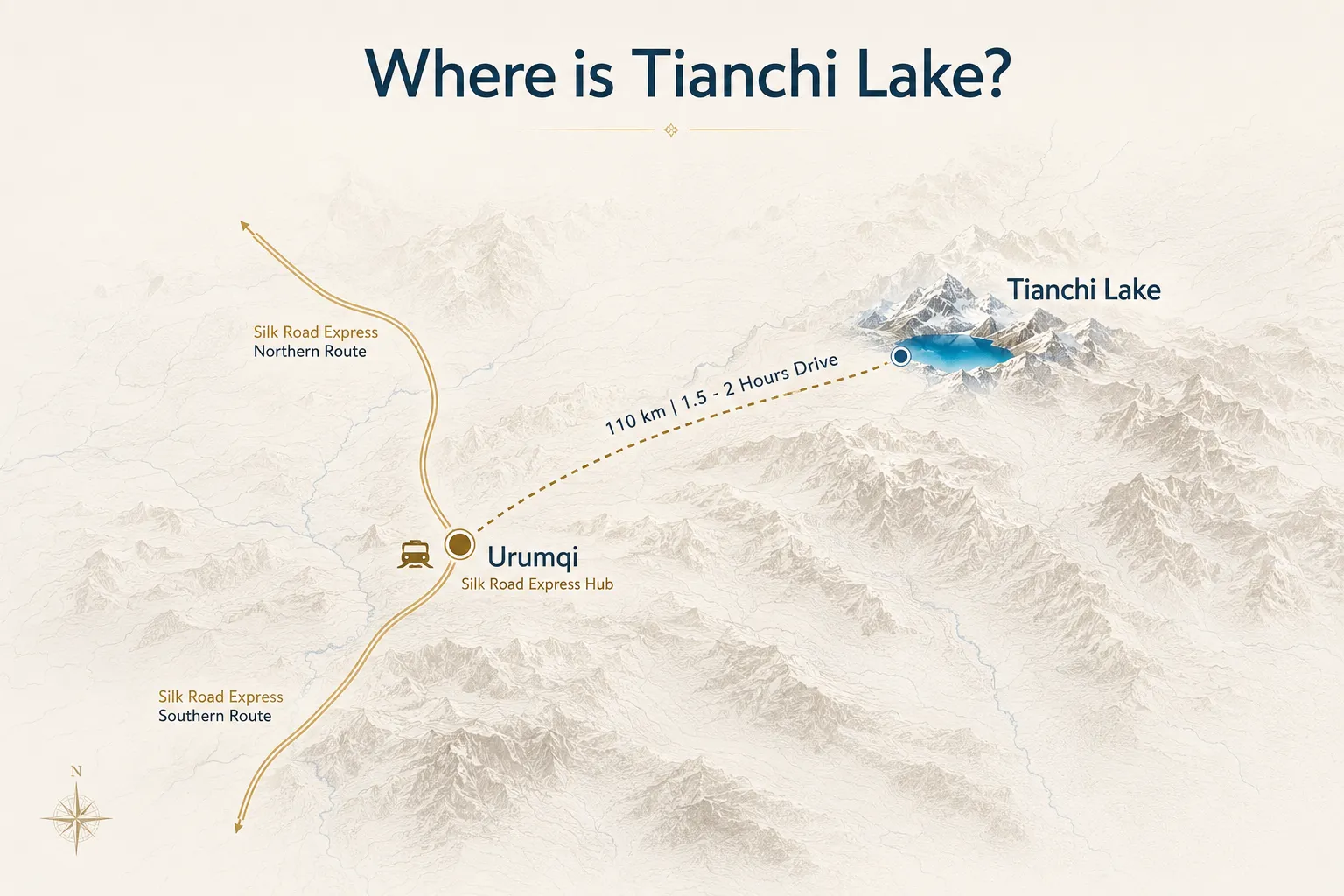
Tianchi Lake is in northern Xinjiang, about 110 kilometers from Urumqi. The drive takes roughly 1.5 to 2 hours. No special permits are required. Public buses and organized tours both make the journey regularly from the city.
For Silk Road Express travelers, Urumqi sits on both the northern and southern Xinjiang routes. Tianchi Lake is perfectly suited for a day trip from either direction.
Why Tianchi Lake Feels Different from the Traditional Silk Road
Mountains Instead of Deserts
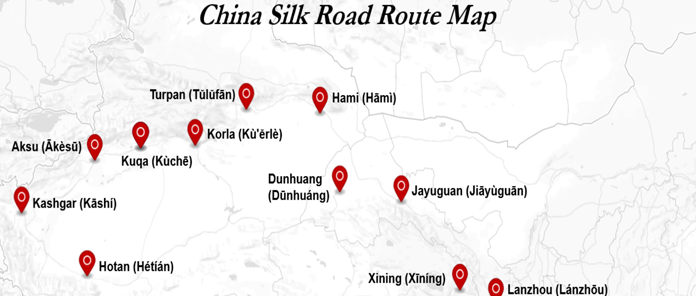
The Gobi Desert stretches flat and rocky for hundreds of kilometers. The Taklamakan is one of the most arid places on earth. Hami, Dunhuang, and Turpan are all surrounded by dry, bare terrain.
Tianchi Lake is the opposite. Steep mountain walls rise on every side. Snow sits permanently on the highest peaks. After days of desert travel through the Silk Road corridor, arriving here genuinely feels like entering a different country.
Forests Instead of Oasis Towns
Silk Road oasis towns exist because underground water makes limited agriculture possible in hostile desert conditions. The green patches in Kashgar and Turpan are small and surrounded by aridity on all sides.
Tianchi Lake is ringed by dense Schrenk spruce forests that cover entire mountain faces. The trees are tall and close together. The atmosphere on the lakeshore is sheltered and cool. Nothing else on the Silk Road Express route feels like this.
Cool Climate and Fresh Air
Summer temperatures in Turpan regularly exceed 40 degrees Celsius. Hami in July is intensely hot. At Tianchi Lake, summer temperatures range from 15 to 25 degrees Celsius. The air is noticeably cooler from the moment you begin climbing the mountain road from Urumqi. For travelers doing the Silk Road in summer, this is a genuine and welcome relief.
What Makes Tianchi Lake Special?
Crystal-Clear Mountain Water
The water comes directly from snowmelt. On calm mornings, the surface reflects the surrounding peaks and forests perfectly. The color shifts throughout the day. Deep blue on clear days. Grey-green under cloud. Dark and still before a storm arrives.
The Tian Shan Mountain Backdrop
Bogda Peak at 5,445 meters sits directly behind the lake. Snow covers its summit permanently. The combination of the lake in the foreground and Bogda Peak rising behind it creates the photograph most people associate with Tianchi Lake. It is one of the most recognizable natural images in all of Xinjiang.
Seasonal Beauty
Each season produces a different lake entirely. Spring brings fresh green growth and the first wildflowers in the alpine meadows. Summer delivers the landscape’s fullest, most vibrant version. The forests are green, the lake is clear, and the contrast between blue water, green slopes, and white snow peaks is at its peak.
Autumn turns the forests gold and amber. The reflection of autumn foliage in the lake water is one of the most striking images the lake produces all year. October is exceptional for photography.
Winter is quiet and monochrome. The lake sometimes partially freezes. Very few travelers visit, but those who do find something dramatic and almost entirely their own.
Things to Do at Tianchi Lake
Walk Along the Lake Shore
A walking path follows the entire perimeter of the lake. The full circuit takes several hours at a relaxed pace. Shorter sections work well for travelers with less time. The path moves through forest sections where the trees close overhead and then opens onto viewpoints where the full mountain backdrop appears suddenly. Go early. The water is calmest before 9 am, and the light is better for photography before midday.
Enjoy Mountain Views
The best views of Bogda Peak are from the northern shore looking south. Several observation points require a short uphill walk of 15 to 20 minutes from the main visitor area. The elevated perspective is significantly better than the flat lake shore view.
Learn About Local Legends
Tianchi Lake is connected to the Queen Mother of the West in Chinese mythology. According to legend, the lake was her bathing pool and the surrounding mountains formed her garden. That story is where the name Heavenly Lake comes from.
Kazakh herders have lived in the mountain valleys around the lake for centuries. Their traditional yurts appear in the alpine meadows above the lake during the summer months. Their presence adds a cultural dimension that pure nature tourism sites rarely have.
Tianchi Lake and the Silk Road Express Experience
After Turpan’s ancient ruins and heat, after Hami’s Yardang desert formations, after long rail crossings through Gansu, arriving at Tianchi Lake resets the journey’s visual experience. The contrast is the point.
A Northern and Southern Xinjiang Journey 17D16N-Train Of Glamour that includes only desert and ancient cities gives a partial picture of what Xinjiang actually is. Tianchi Lake adds the piece that everything else on the route lacks. Desert, mountain, lake, and forest all within the same journey.
Tianchi Lake vs Other Natural Attractions on the Silk Road Route
Destination | Main Attraction |
Tianchi Lake | Mountain lake with alpine forest and snow peaks |
Karakul Lake | High-altitude plateau lake with three peaks above 7,500m |
Hami Yardang | Wind-carved desert rock formations in the Gobi corridor |
Gobi Desert | Vast open rocky desert with ancient Silk Road history |
No other comparable journey in Asia moves through this range of landscapes in such close sequence. Each stop is genuinely different from the last.
Best Time to Visit Tianchi Lake
● June to September is the peak season. Clear skies, warm days, and the most vibrant version of the landscape. July and August bring the most visitors, but the scenery justifies the crowds.
● May and October are better for photographers. Fewer people, softer light, and in October, the autumn colors in the forest are exceptional. The lake in October, with gold and amber reflections, is arguably the best version of Tianchi Lake all year.
● Winter is cold, and some road sections can be snowed in. Check conditions before attempting a winter visit.
Travel Tips for Visiting Tianchi Lake
Bring a warm layer regardless of the season. The lake is significantly cooler than Urumqi below, and the wind on the water can be sharp even in summer.
Altitude at 1,910 meters is not extreme, but move slowly on arrival and drink water consistently. Some visitors feel mild breathlessness in the first hour.
Arrive early for photography. The lake surface is calmest before 9 am. Return in the late afternoon for warm light on Bogda Peak at sunset.
Give yourself at least half a day. A full day is better. Most organized tours rush through in two to three hours, which is not enough time to walk the shore, reach the observation points, and sit and take in the landscape.
Why Tianchi Lake Matters on a Silk Road Journey
Beyond Tianchi Lake, the Silk Road is dotted with numerous sites brimming with profound history and rich culture. Silk Road Express Luxury Routes-Train Of Glamour journey through Xinjiang connects a full spectrum of scenic spots across the region, allowing travelers to immerse themselves in Xinjiang’s diverse charms in one seamless trip.
Conclusion
Tianchi Lake does not look like the Silk Road. That is exactly why it belongs on a Silk Road journey. It shows a version of Xinjiang that desert landscapes and ancient cities cannot show. Mountains, forests, clear water, and cool air.
After days of heat and dust and history, the lake offers the journey a place to breathe. The Silk Road has always been more than one landscape. Tianchi Lake is the proof.
FAQs
What is Tianchi Lake famous for?
It is famous for its crystal-clear mountain water, dense alpine forests, and the dramatic backdrop of Bogda Peak at 5,445 meters. It is part of a UNESCO World Heritage Site and one of Xinjiang’s most visited natural attractions.
Why is Tianchi Lake called Heavenly Lake?
The name comes from Chinese mythology, connecting the lake to the Queen Mother of the West. According to legend, this was her sacred bathing pool, and the surrounding mountains formed her garden.
Can you visit Tianchi Lake as part of a Xinjiang journey?
Yes. It is 110 kilometers from Urumqi and can be reached as a day trip with no special permits required. It fits naturally into any Silk Road Express itinerary that includes Urumqi as a stop.
When is the best time to visit Tianchi Lake?
June to September for peak conditions. October for autumn colors and fewer crowds. May for spring greenery and quieter trails.