




Traditional Clothing Along the Silk Road
When you embark on the Silk Road Express by Glamour Trains, you are not just enjoying a luxury rail journey; you are traveling through a living, breathing museum of ancient cultures. As you relax in your private suite or admire the ever-changing vistas from the 270° Panoramic Car, the landscapes outside will shift from high-altitude plateaus to vast deserts and deep alpine forests. Along with these geographical wonders, you will encounter a dazzling array of traditional ethnic clothing.
Each garment you see from your window or during our expertly curated ground excursions tells a story of the local climate, history, and ancient ways of life. Here is your in-depth cultural guide to the vibrant attire you will witness on your Northern and Southern Xinjiang journey.
The Tibetan Chuba: Survival and Style on the High Plateau
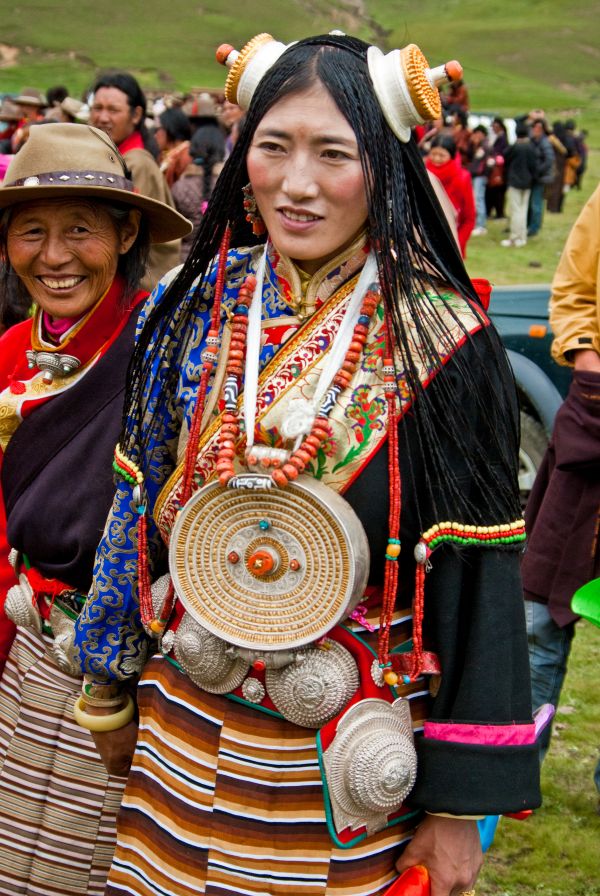
As the Silk Road Express arrives in Xining, the grand gateway to the Qinghai-Tibet Plateau, the air grows crisper and the landscapes stretch into vast, high-altitude plains. This awe-inspiring region is the ancestral home of the Tibetan people. Before you step off the train for your first curated excursion, it is essential to understand that fashion here is not merely about aesthetics; it is a masterclass in adapting to one of the most challenging environments on Earth. The local attire, characterized by the iconic Chuba, is as majestic and robust as the snow-capped mountains that surround you.
By Antoine Taveneaux - Own work, CC BY-SA 3.0
Origins & Extreme Climate Adaptation
The Chuba has a history dating back over a thousand years to the ancient Tubo Empire. It was born out of absolute necessity, designed by ancient nomadic herders to survive the harsh, unpredictable climate of the "Roof of the World," where temperature drops of up to 20°C (68°F) in a single day are common.
Ingenious Craftsmanship and Design
An authentic winter Chuba is a masterpiece of thermal engineering, typically requiring 5 to 8 whole adult sheepskins and weighing between 10 to 15 kilograms (22 to 33 lbs). It is cut extremely large and tied tightly at the waist with a sash, creating a massive, hollow pouch at the chest. Locals use this spacious pocket to carry wooden bowls, tsampa (roasted barley flour), and even small baby lambs during sudden snowstorms. As the sun climbs, you will witness the famous "one-sleeve" wearing style: herders slip their right arm out of the sleeve to regulate body temperature without needing to change clothes entirely.
Elaborate Jewelry and 108 Braids
During our guided excursions, notice the exquisite detailing. Women often wear heavy, ornate headdresses woven with exactly 108 braids (a sacred number in Tibetan Buddhism). These braids are meticulously decorated with centuries-old turquoise, red coral, and rare Dzi beads, making their daily attire as valuable as a portable treasury.
Uyghur Etles Silk and Doppa: The Colors of the Oasis
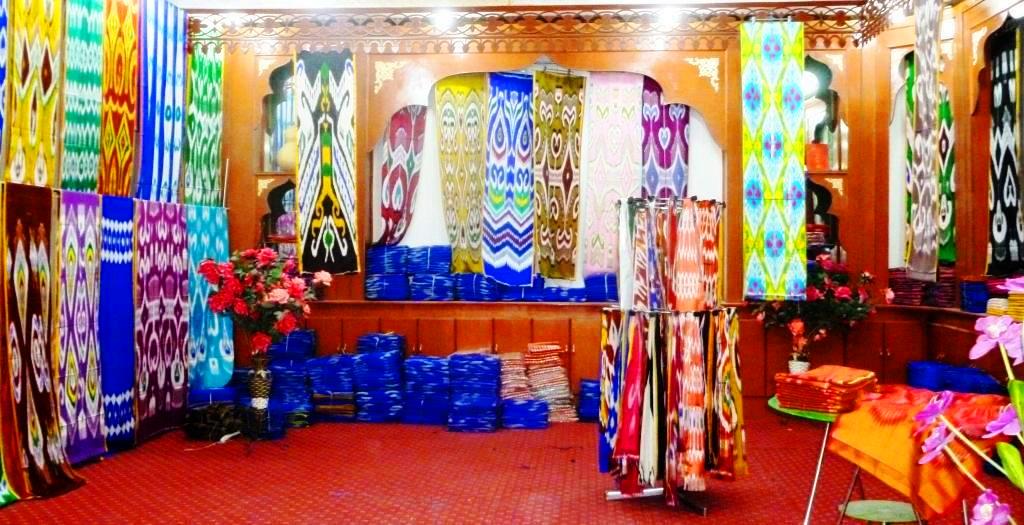
Leaving the towering mountains behind, the train glides into the warm, sun-drenched oasis cities of Southern Xinjiang, such as Kashgar and Kuqa. Here, the stark, golden desert surroundings are beautifully contrasted by the shade of grape trellises, bustling local bazaars, and the joyful melodies of the rawap. This is the cultural heartland of the Uyghur people. Walking through these ancient streets, you will notice that their clothing acts as a walking art gallery, injecting brilliant, flowing colors into the dry landscape and echoing the prosperous mercantile history of the Silk Road.
By John Hill - Own work, CC BY-SA 4.0,
The 1,000-Year-Old Etles Silk
The signature material here is Etles Silk, a national intangible cultural heritage spanning over 1,000 years that utilizes an ancient ikat (resist-dyeing) technique. Creating a single piece involves a painstaking 10-step process. Artisans use natural plant and mineral dyes—madder root for reds, indigo for blues, and walnut husks for black—to create over 30 traditional pattern categories. The motifs heavily reflect oasis life, featuring abstract renditions of tree leaves, water droplets, and musical instruments with prized blurred, feather-like edges.
The Micro-Art of the Doppa
Complementing the silk is the Doppa, a four-paneled skullcap. It is a masterpiece of micro-embroidery, utilizing over 10 distinct stitching techniques. There are dozens of regional variations. For example, young men often wear the Chiman Doppa with vibrant green motifs signifying vitality, while older men prefer the Badam (almond) motif in subdued dark purple or black.
The Buttonless Chapan
For men's outerwear, you will spot the Chapan, a long, collarless coat lined with cotton. A fascinating detail: a traditional Chapan has zero buttons. It is simply folded over and secured with a beautifully woven square sash, up to 2 meters long, wrapping tightly around the waist.
Kazakh Nomadic Wear: A Heritage Born on Horseback
When the tracks lead you to the boundless, emerald oceans of Northern Xinjiang—including the breathtaking Bayanbulak and Beitun regions—you enter the sweeping domain of the Kazakh nomads. In these vast grasslands, life is inextricably linked to the changing seasons, the open sky, and the rhythmic galloping of horses. The clothing of the Kazakh people is an elegant yet remarkably rugged reflection of this proud, equestrian lifestyle, blending supreme practicality with ancient cultural symbolism dedicated to the harmony of nature and livestock.
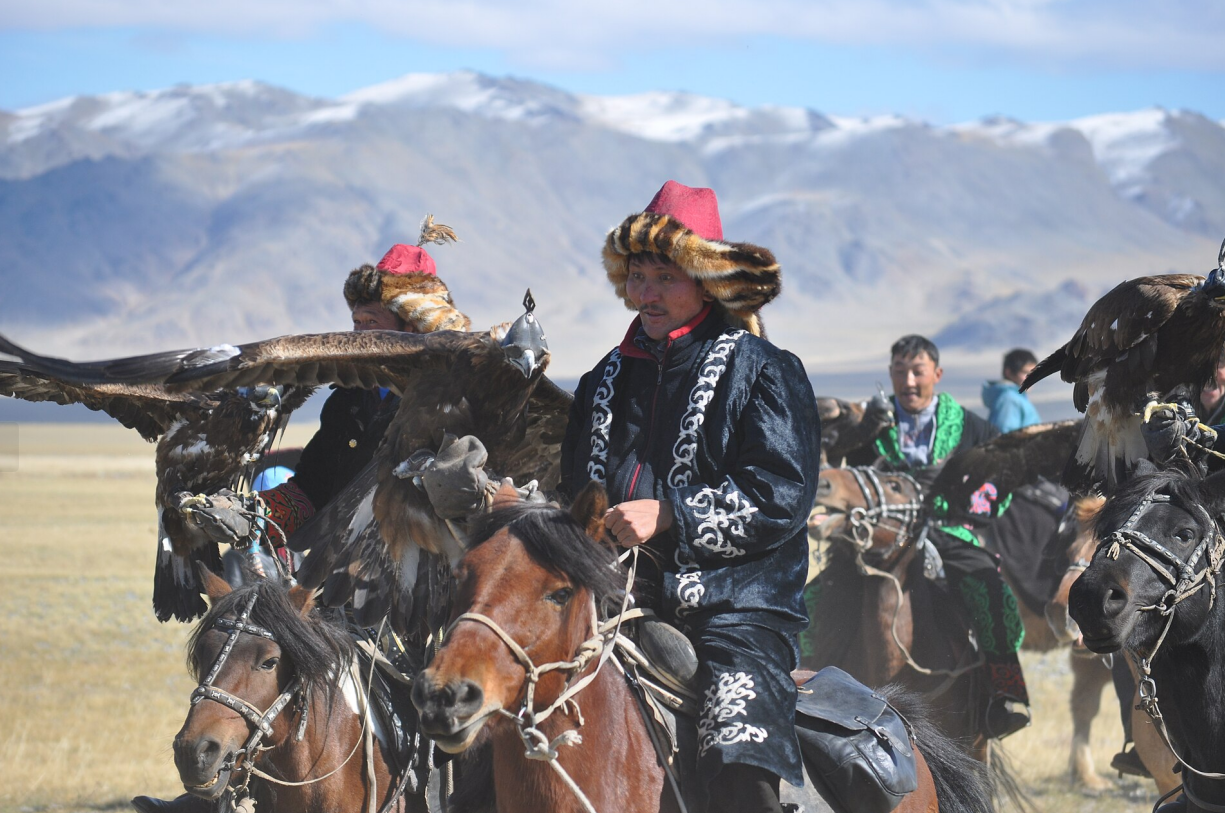
By Altaihunters - Own work, CC BY-SA 3.0
Roots on the Eurasian Steppe
The roots of Kazakh clothing trace back over two millennia to ancient Eurasian steppe tribes like the Wusun. Their attire has evolved specifically to serve the needs of a highly mobile, equestrian lifestyle, surviving winters that plunge to -30°C (-22°F).
Distinctive Accessories and Footwear
Kazakh clothing heavily utilizes animal products for extreme warmth. Men often wear the Tmaq (吐玛克), a robust winter hat made of thick fox fur with elongated ear flaps, while both men and women wear tough, knee-high riding boots perfectly contoured for resting in stirrups. For young, unmarried women, the most iconic accessory is the Taqiya, a stiff, pointed cap crowned with a tuft of owl feathers. In ancient Kazakh lore, the owl is a nocturnal guardian, and its fluttering feathers serve as a talisman to ward off evil spirits.
Geometric Nomadic Embroidery
Take a close look at the felt and cloth embroidery on their vests. Unlike agricultural societies, you will rarely see floral patterns. Instead, there are over 50 specific geometric motifs representing animals. The most prominent is the Qoshqar muiiz (ram horns), an ancient symbol expressing a profound wish for the multiplication of their herds.
Tajik Attire: Echoes of Antiquity on the "Roof of the World"
Ascending to the dramatic heights of Tashkurgan on the Pamir Plateau, the environment transforms into a breathtaking panorama of rugged stone fortresses and towering, snow-capped peaks. This remote and awe-inspiring region is home to the Tajik people, often celebrated as the "Eagles of the Pamir." Because they live at such extreme altitudes, their striking attire provides a beautiful, vivid contrast against the snowy backdrop. More importantly, their garments carry the fascinating secrets of ancient civilizations that once thrived along these high-mountain passes.
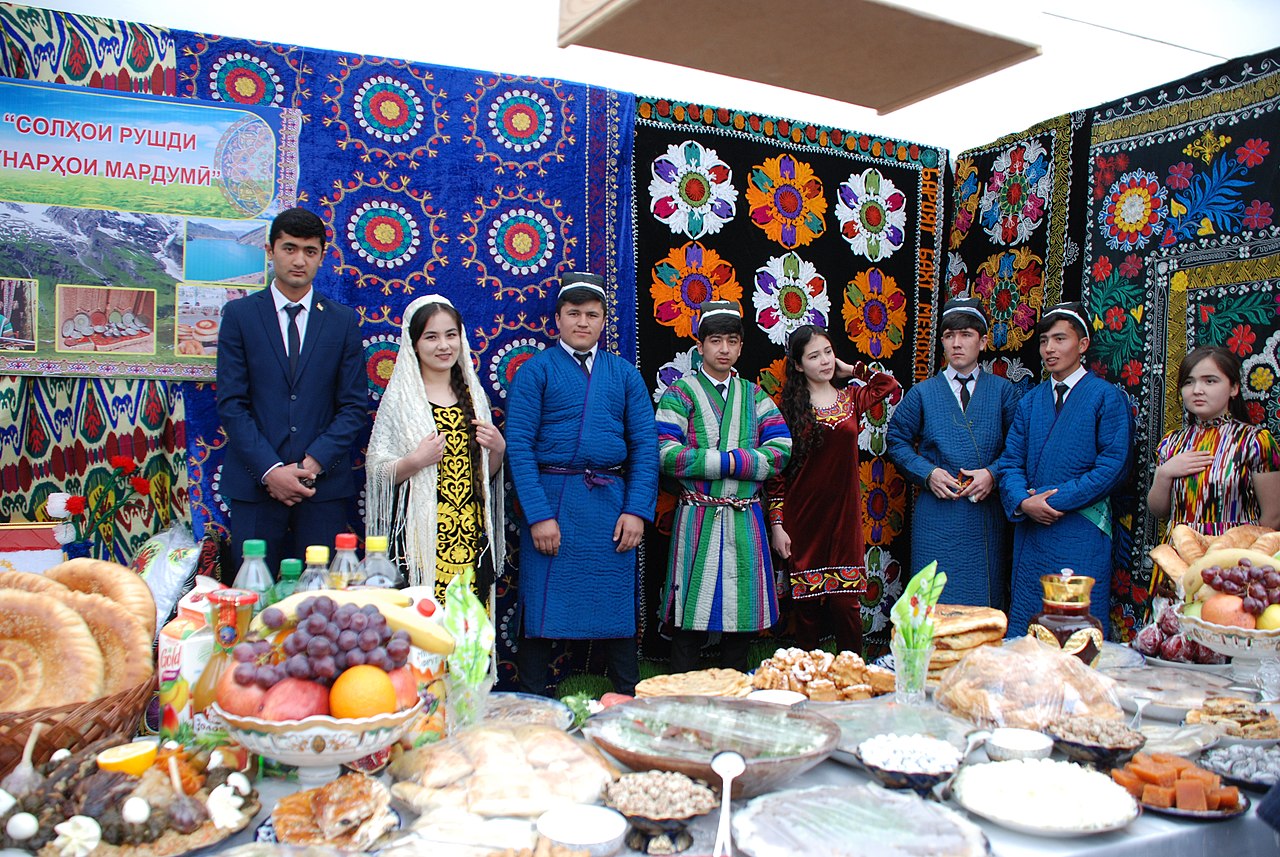
Ilhoms, CC BY-SA 4.0, via Wikimedia Commons
Ancient Zoroastrian Roots
The ancestors of the Tajiks were Eastern Iranian peoples who settled in the Pamir Mountains over 2,000 years ago. Their traditional clothing predominantly features striking contrasts of red and black, carrying fascinating echoes of ancient Zoroastrianism—a pre-Islamic religion that profoundly revered fire, the sun, and light.
Distinctive Headwear and Silver Ornaments
Men are recognized by their Tumak, a distinctive round hat with a black velvet crown surrounded by a thick rim of black lambskin. Women wear a breathtaking flat, circular embroidered pillbox hat called a Kuleta. Draped over the front of the Kuleta is the Silsila, a delicate fringe of 10 to 20 dangling silver chains framing the face. On their chests, women proudly wear the Alka , a massive, circular silver ornament measuring 10 to 15 centimeters in diameter.
The Sacred "Sunflower" Motif
The most vital detail is their embroidery, particularly the "sunflower" (太阳花) motif. Unlike a literal flower, this is a stylized, radiating sunburst pattern stitched in bright red and yellow threads. It is a direct, living continuation of their ancestors' sun worship.
Tuva Mongol Robes: Guardians of the Taiga
Finally, as your journey takes you off the train and deep into the hidden, fairy-tale valleys of Kanas and Hemu in the Altai Mountains, the scenery shifts to enchanting alpine lakes, morning mist, and dense pine forests. This secluded wonderland is the enchanting home of the Tuva people. Surrounded by wooden log cabins, the Tuva wear garments that perfectly harmonize with their mystical woodland environment. Their unique fashion bridges the gap between the open steppes and the deep forest, reflecting a quiet, self-sufficient life of hunting and herding in the snow.
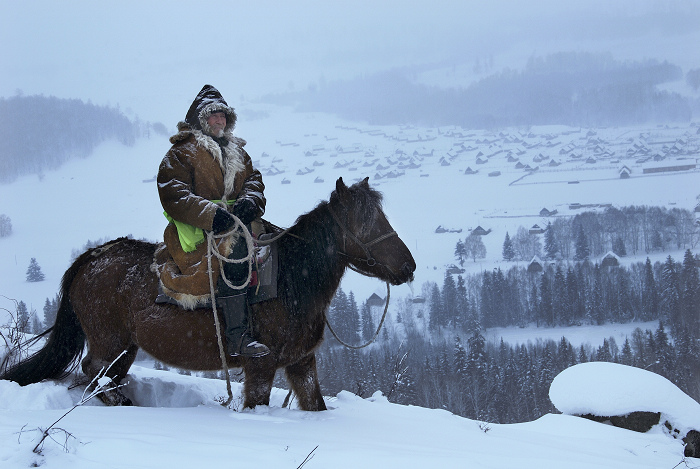
自游自在, CC BY-SA 2.5 CN via Wikimedia Commons
A Rare Forest Heritage
Numbering only around 2,500 to 3,000 individuals in China, the Tuva people are a rare and fascinating branch of the Mongols, believed to be descendants of ancient Siberian forest tribes and soldiers of Genghis Khan. Their clothing serves as a unique bridge between the open grasslands and the deep taiga (snow forests).
Tailored for Deep Forest Survival
While maintaining the right-fastening collar of traditional Mongolian robes, Tuva attire is uniquely tailored. To prevent dragging in the deep snow (which can pile up to 2 meters high in Hemu), the robes are cut slightly shorter. The colors are deeply tied to nature—often dark blues, greens, or browns—offset by brilliantly contrasting silk sashes.
The Ingenious Upturned Boots
Perhaps the most specialized items are their footwear. Tuva herders wear distinctive high-barreled leather boots with stiff, upturned toes. This ancient design is a stroke of genius: the curved toe prevents the boot from catching on underbrush and roots in the forest, and importantly, it ensures the wearer does not dig into and damage the fragile alpine grass while walking or riding.
With the 24/7 support of your dedicated vacation ambassador, every step of your journey off the Silk Road Express is as seamless as your time on board. May this guide enrich your understanding of the magnificent cultures that await you.