




Slow Travel: What It Is and Why Train Journeys Are the Perfect Way to Experience It
Modern travel has never been faster — but more exhausting. We book back-to-back flights, squeeze five cities into a week, and spend more time in transit than actually experiencing the places we visit. Social media has turned travel into a checklist: landmarks photographed, boxes ticked, and then on to the next destination before we've had time to breathe.
But a growing number of travellers are pushing back. Tired of whirlwind itineraries and surface-level sightseeing, they're choosing a different approach —one that values how deeply you experience a place over how many places you visit, and being truly present over simply being busy.
They're choosing slow travel.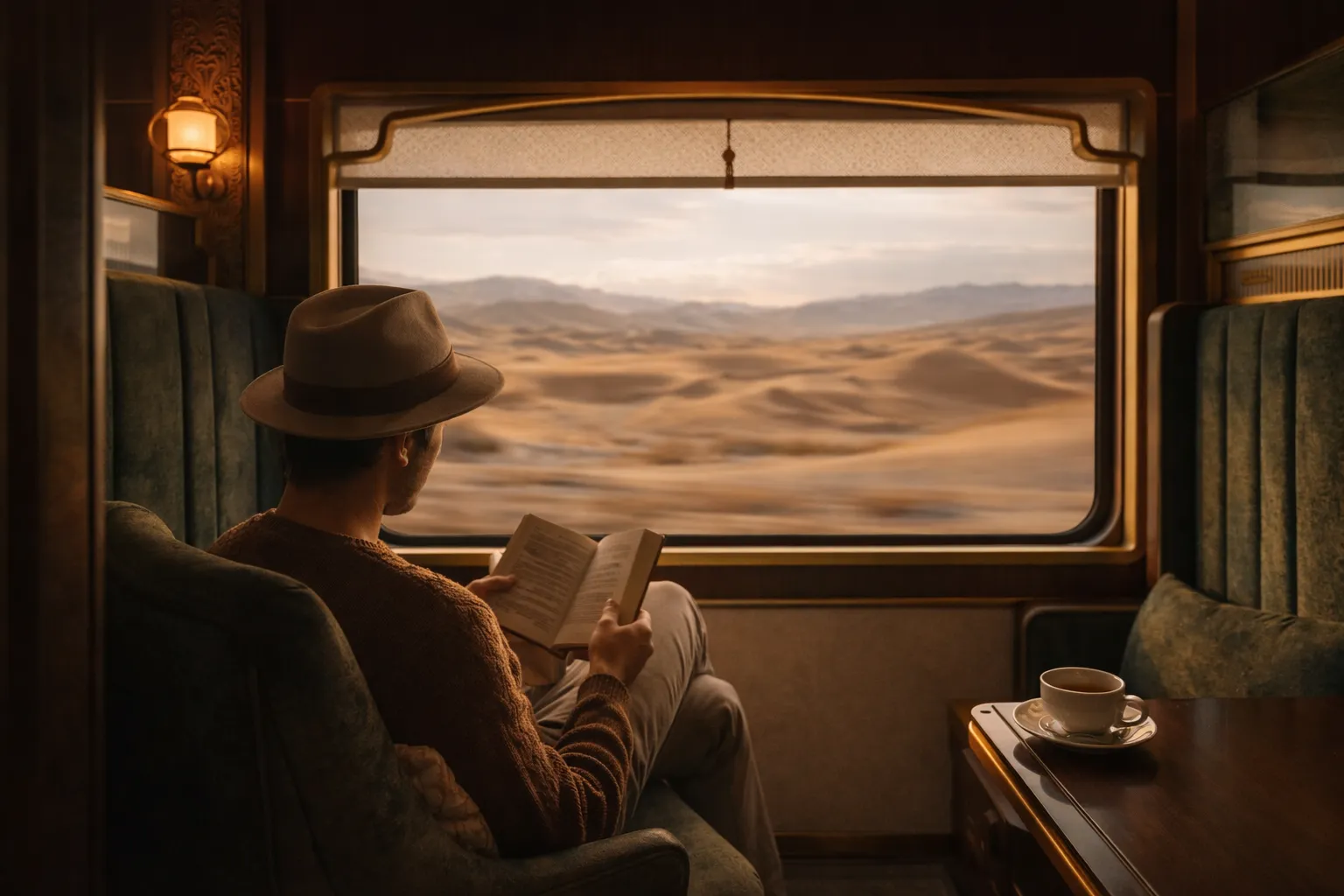
Slow travel focuses on experiencing fewer places more deeply rather than rushing through many destinations. And as we'll explore in this guide, there may be no better way to practise it than by train.
What Is Slow Travel?
Slow travel is a mindset as much as a method. At its core, it means resisting the urge to see everything, and instead choosing to truly experience something.
The concept is closely linked to the Slow Food Movement, which emerged in Italy in the late 1980s as a reaction against fast food culture. Its founding principle — that the way we consume something matters as much as what we consume — translated naturally into travel. If fast food sacrifices quality for convenience, fast travel sacrifices experience for novelty.
Where conventional tourism often means covering as many destinations as possible in the shortest time, slow travel asks a different question: what would it feel like to actually live somewhere, even briefly?
In practice, slow travel means:
Slowing the pace. Rather than rushing through a checklist of must-see spots in a single day, slow travellers might spend that same day losing themselves in one neighbourhood or sitting with a single museum until they truly understand it. What they take home isn't just a camera roll of photographs — it's stories and cultural insights worth sharing.
Seeking deeper cultural experiences. Instead of visiting the top ten tourist sites, slow travellers seek out local markets, community festivals, independent restaurants, and the kinds of conversations that don't happen in hotel lobbies.
Staying longer, moving less. Fewer flights, fewer check-ins, fewer hours lost to transfer. The energy saved from not constantly relocating is reinvested into actually being somewhere.
Reducing unnecessary movement. Every transition between destinations — packing, travelling, unpacking, orienting yourself — costs time and mental energy. Slow travel minimises these transitions deliberately.
Slow travel is about quality of experience rather than quantity of destinations. It's a philosophy that treats travel not as a performance to be documented, but as a genuine encounter with the world.
Why More Travellers Are Choosing Slow Travel
The appeal of slow travel has grown steadily over the past decade, and for reasons that go well beyond fatigue with busy itineraries.
1. Deeper Cultural Understanding
Spending more time in fewer places creates the conditions for a different kind of travel — but time alone isn't enough. The deeper shift comes when you move through a destination with someone who truly knows it: a local guide who can explain why a particular shrine matters to the community, a culinary expert who knows which family has been making the same dish for three generations, or a historian who can turn a crumbling city wall into a vivid story about the civilisation that built it. Slow travel creates the space for these encounters — the unhurried conversations, the guided detours off the standard itinerary, the moments where a place stops being a backdrop and becomes a narrative you're genuinely part of.
2. A More Relaxed, Restorative Experience
Conventional packed itineraries are, by design, a form of low-grade stress. The constant pressure to be somewhere, see something, and move on rarely leaves room for genuine rest or spontaneous discovery. Slow travel removes that pressure. Without a rigid schedule demanding you be in three places before lunch, travel becomes what many people hope it will be: genuinely restorative. There is space to stop before a single fresco, to study the craft of an artisan who lived a thousand years ago, to trace the marks that time has left behind — until you no longer feel like a visitor standing outside history, but a quiet presence within it.
3. A More Sustainable Way to Travel
Slow travel is, almost by definition, more environmentally responsible. According to Our World in Data, aviation accounts for a significant share of transport-related carbon emissions — and short-haul flights are among the most carbon-intensive per kilometre travelled. Choosing ground transportation, staying in locally owned accommodation, and spending money in local shops and restaurants rather than international chains all contribute to what the UNWTO defines as sustainable tourism — travel that meets the needs of present visitors while protecting destinations for future generations.
4. The Journey Becomes Part of the Experience
Perhaps the most significant shift that slow travel offers is this: the journey stops being something to endure and starts being something to savour. Getting from one place to another doesn't have to mean hours in airport queues, cramped seats, and disconnection from the world outside. When travel itself is given space and intention, the in-between moments — the landscapes passing outside a window, the gradual transition from one region to another — become part of the experience rather than obstacles to it.
Popular Ways to Practise Slow Travel
Slow travel isn't a single activity — it's an orientation toward travel that can take many different forms depending on your interests, your destination, and how you like to move through the world.
Extended stays in a single place are perhaps the most straightforward expression of slow travel. Rather than spending two nights in a city and moving on, you stay for a week or more. You shop at the same market, walk the same streets until they become familiar, and develop the kind of relationship with a place that short visits simply don't allow.
Hiking and cycling journeys offer a particularly immersive form of slow travel, one where the landscape is experienced physically rather than just visually. Walking the Camino de Santiago, cycling through the rice paddies of rural Japan, or trekking between mountain villages in Nepal — these are journeys where the path itself is as meaningful as the destination.
Train travel occupies a special place in the world of slow travel. Unlike flying, which removes you entirely from the geography between two points, travelling by train keeps you connected to the land throughout. The view from the window changes gradually — city giving way to suburb, suburb to countryside, countryside to mountain or coast — and that gradual transition is itself a kind of understanding. Train travel is often considered one of the best ways to experience slow travel, and the reasons why are worth exploring in more depth.
Slow Travel Tips: How to Travel More Slowly
If you're drawn to the idea of slow travel but not sure where to start, a few practical shifts can make a significant difference.
Reduce the number of destinations. The single most effective change you can make to a travel itinerary is to cut it down. Five days in four cities is a logistics exercise. Five days in one or two cities is an experience. Resist the pressure — often self-imposed — to maximise coverage, and give yourself permission to go deeper instead of further.
Immerse yourself in local culture. Seek out the experiences that connect you to daily life in a place: local markets, independent restaurants serving regional food, craft workshops, neighbourhood festivals. These encounters tend to be more revealing — and more memorable — than the standard tourist circuit.
Choose slower forms of transport. Where possible, opt for ground transportation over flying. Trains, ferries, and even long-distance buses allow you to remain in contact with the landscape and transition gradually between places. On longer journeys, the train in particular offers something flying never can: the experience of the journey itself. This is a principle worth returning to — because when it comes to slow travel, few things embody it more completely than train travel.
Why Train Travel Is the Ideal Way to Practise Slow Travel
Of all the ways to travel slowly, train travel may be the most perfectly suited to the philosophy. The reasons go deeper than simply moving at a gentler pace.
The landscape unfolds continuously. On a train, you don't teleport between departure and arrival — you witness every kilometre of the journey between them. Mountain ranges emerge gradually on the horizon and then surround you. Deserts shift from sandy plains to sculpted rock formations. Rural villages appear and disappear. The changing landscape outside the window is a continuous education in geography, ecology, and the relationship between human communities and the land they inhabit. This is something no flight can offer, and no highlight reel can replicate.
The rhythm is naturally unhurried. There are no security queues, no boarding announcements, no seatbelt signs. You arrive at the station, board the train, and the journey begins. The pace of train travel — steady, purposeful, unhurried — mirrors the pace of slow travel itself. It encourages you to settle, to be present, to look outward rather than inward at a screen.
The environment supports genuine rest and reflection. Train carriages offer a quality of space that aircraft rarely provide: room to stand and stretch, the option to visit a dining car, windows that actually frame the world outside. Long train journeys have historically been associated with reading, conversation, and contemplation — and for good reason. They create the conditions for exactly the kind of thoughtful, unhurried experience that slow travel seeks.
Connection to place is maintained throughout. Perhaps most importantly, train travel never severs your connection to the geography you're moving through. You remain on the earth's surface, passing through real landscapes and real communities, the whole time. That continuous connection is at the heart of what makes train travel feel meaningful in a way that flying often doesn't.
The Silk Road: One of the World's Great Slow Travel Routes
If slow travel is about depth of experience, the Silk Road is one of the most extraordinary canvases in the world on which to practise it.
For over a thousand years, this network of trade routes connected East and West, carrying not only silk and spices but ideas, religions, languages, and ways of life. The civilisations that grew along these routes — Chinese, Persian, Turkic, Sogdian, and many others — created a cultural landscape of extraordinary complexity and depth. To travel the Silk Road slowly is to move through layers of history that most parts of the world simply cannot match.
The physical landscape is equally extraordinary. The Silk Road passes through some of the most dramatic terrain on earth: the vast emptiness of the Gobi Desert, the wind-carved sandstone of the Taklamakan, the soaring altitude of the Tibetan Plateau, the improbable greenery of oasis cities rising from arid plains.
Three destinations in particular capture the essence of what makes slow travel along this route so rewarding:
Dunhuang sits at the edge of the desert in Gansu Province, a small city that has been a crossroads of civilisations for two millennia. The Mogao Gottoes(Caves) — a complex of 492 temples carved into a cliff face, containing some of the world's finest Buddhist art — represent one of humanity's great cultural achievements. Beyond the caves, the singing sand dunes of Mingsha Mountain and the mirror-still waters of Crescent Moon Spring offer a landscape of surreal beauty. Dunhuang rewards slow travel: the more time you spend here, the more it reveals.
Xining, gateway to the Tibetan Plateau, is a city where Tibetan, Hui Muslim, Han Chinese, and Mongolian cultures have coexisted for centuries. The surrounding landscape — grasslands stretching to snow-capped horizons, the vast expanse of Qinghai Lake, the high-altitude stillness of the plateau — has a quality of openness and silence that is unlike anywhere else on earth. It is a place that asks you to slow down simply by the nature of its atmosphere.
Kashi(Kashgar), at the far western edge of China's Xinjiang region, is one of the oldest continuously inhabited cities on the Silk Road. Its old city — a dense network of mud-brick lanes, traditional courtyard houses, and artisans' workshops — has preserved a way of life that has changed relatively little over centuries. The Sunday Livestock Market, one of Central Asia's largest, has been drawing traders from across the region for generations. Kashgar is a place where the ancient world feels genuinely present, not as a museum exhibit but as a living reality.
Luxury Slow Travel by Train: Silk Road Express by Train of Glamour
For travellers who want to experience the depth and drama of the Silk Road without sacrificing comfort, the Silk Road Express by Train of Glamour offers something genuinely distinctive: luxury slow travel by private train through one of the world's most storied landscapes.
Train of Glamour was founded on the belief that the journey should be as extraordinary as the destination — that moving slowly and intentionally through a landscape, with the space and support to truly absorb it, represents the highest form of travel. The Silk Road Express is the embodiment of that philosophy.
Aboard the train, elegantly appointed private cabins provide a comfortable base from which to watch the desert, plateau, and oasis landscapes unfold outside the window. Expert cultural guides — accompany every journey, providing context and insight that transforms sightseeing into genuine understanding. Carefully curated excursions at each destination allow passengers to go beyond the surface, accessing sites and experiences that independent travellers rarely encounter.
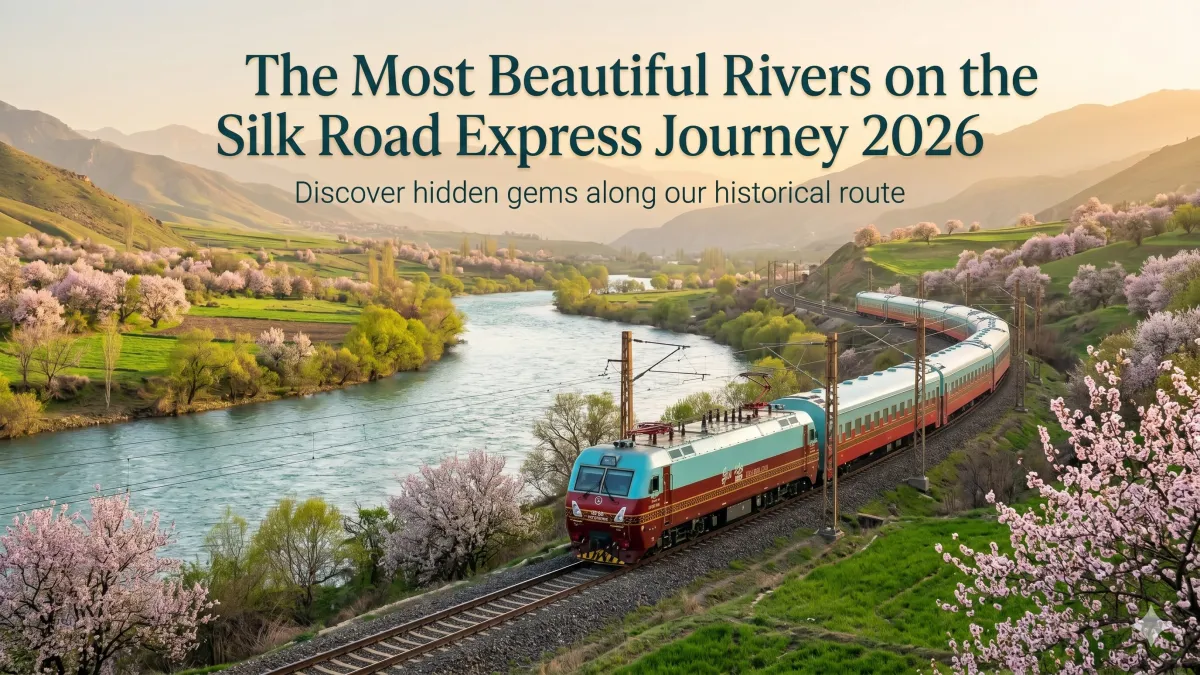
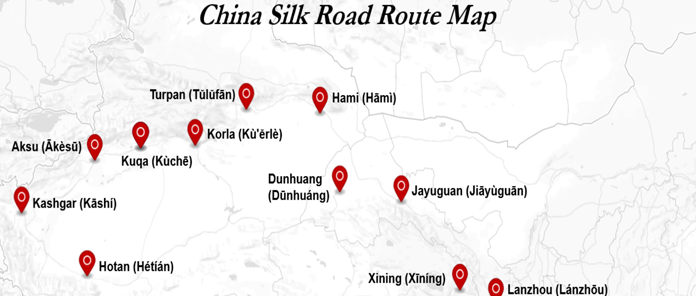
The journey follows a route that traces the ancient trade corridor through its most compelling landscapes and cities: departing from Xining on the edge of the Tibetan Plateau, crossing the Gobi to Dunhuang and its millennia-old cave temples, continuing through the dramatic terrain of the Tianshan to Kuche (Kuqa), with its remarkable Buddhist ruins, and arriving finally at Kashi(Kashgar), the legendary endpoint of the eastern Silk Road.
This is not a journey for those who want to move quickly. It is a journey for those who understand that the greatest travel experiences come from presence, patience, and the willingness to let a place genuinely reach you — ideally from the window of a well-appointed train carriage, with a glass of wine and several thousand kilometres of extraordinary landscape ahead.
Travel Slower, Experience More
In a world where travel often feels rushed, slow journeys by train offer a chance to rediscover the joy of the journey itself.
The fundamental promise of slow travel is a simple one: that when you stop trying to see everything, you begin to truly see something. That when you remove the pressure to be constantly moving and constantly arriving, travel becomes what it was always capable of being — a genuine encounter with the world, with other people, and with yourself.
Train travel, at its best, embodies that promise completely. It keeps you connected to the earth, moves at a pace that allows reflection, and transforms the distance between two places into an experience worth having in its own right.
The Silk Road, one of history's great corridors of human connection, is perhaps the most fitting place on earth to travel in that spirit. And there are few better ways to do so than slowly, by train, with the ancient landscapes of Central Asia unfolding beyond your window.
The ticket is waiting. The only question is whether you're ready to take the slow road.