




China Climate & Weather Guide: A Regional Breakdown for Travelers
China's climate is as vast and complex as its geography. Stretching from the sub-zero ice landscapes of Harbin to the tropical coastlines of Hainan, and rising to the "Roof of the World" in Xizang(Tibet), the country's weather patterns are a study in extremes.
For international travelers, understanding these regional nuances is not just about packing the right coat—it is about safety, health, and maximizing the quality of your experience.
In this guide, we provide a region-by-region meteorological breakdown, highlight the specific challenges of the Silk Road corridor, and offer expert strategies for navigating China's dramatic climate shifts.
The Big Picture: Understanding the Monsoon
China's climate is dominated by the East Asian Monsoon, a powerful system that dictates the rhythm of life and travel.
● The Winter Monsoon (Oct–Mar): Brings cold, dry air from Siberia, creating crisp blue skies but freezing temperatures in the North.
● The Summer Monsoon (Apr–Sept): Carries warm, moist air from the Pacific, bringing heat and the majority of the country's rainfall.
Expert Insight: According to data from the World Bank Climate Change Knowledge Portal, precipitation in China is highly uneven, with over 70% of annual rainfall concentrating in the summer months. Travelers seeking dry conditions should prioritize shoulder seasons (Spring/Autumn) or explore the arid Northwest.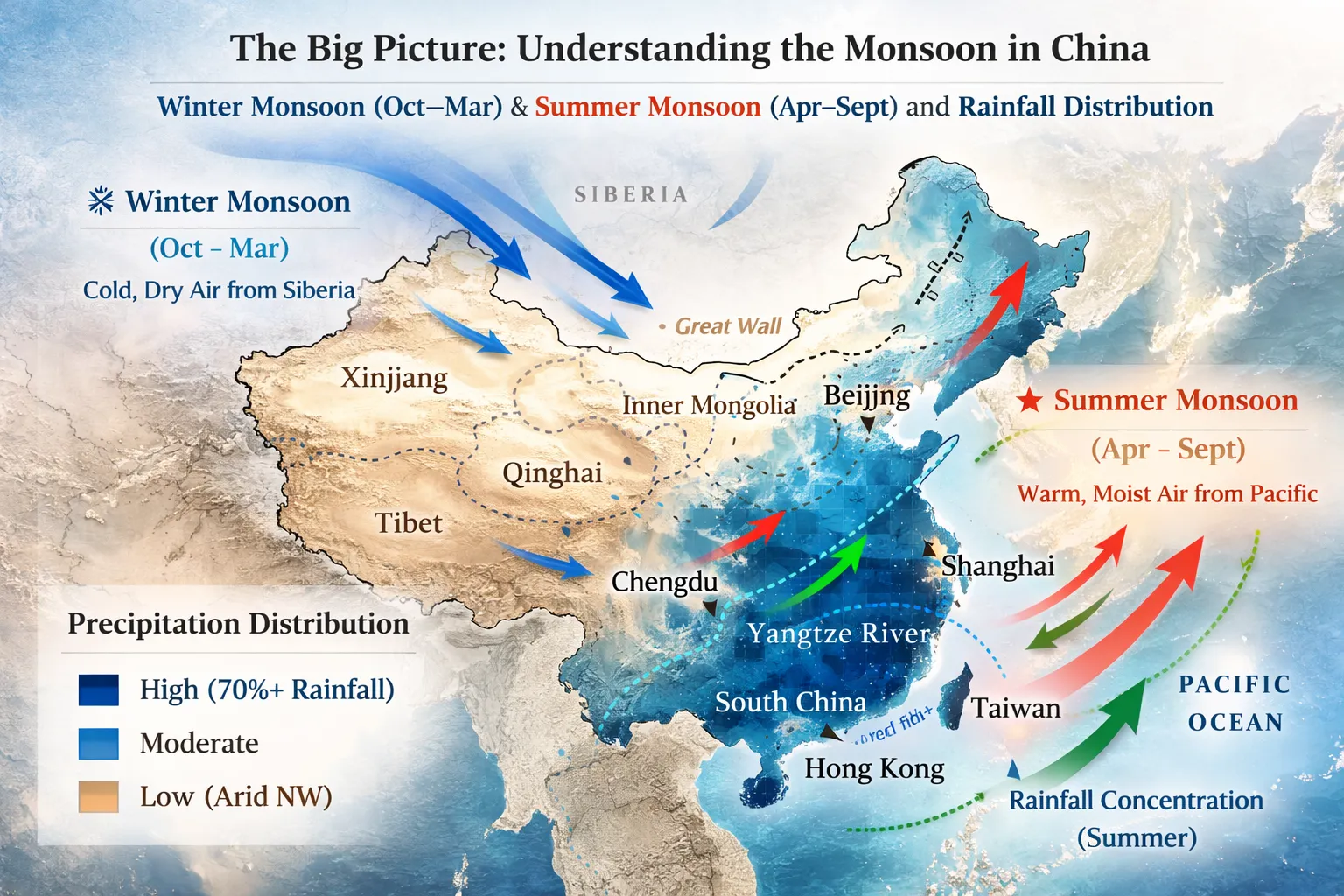
Regional Climate Breakdown & Travel Strategy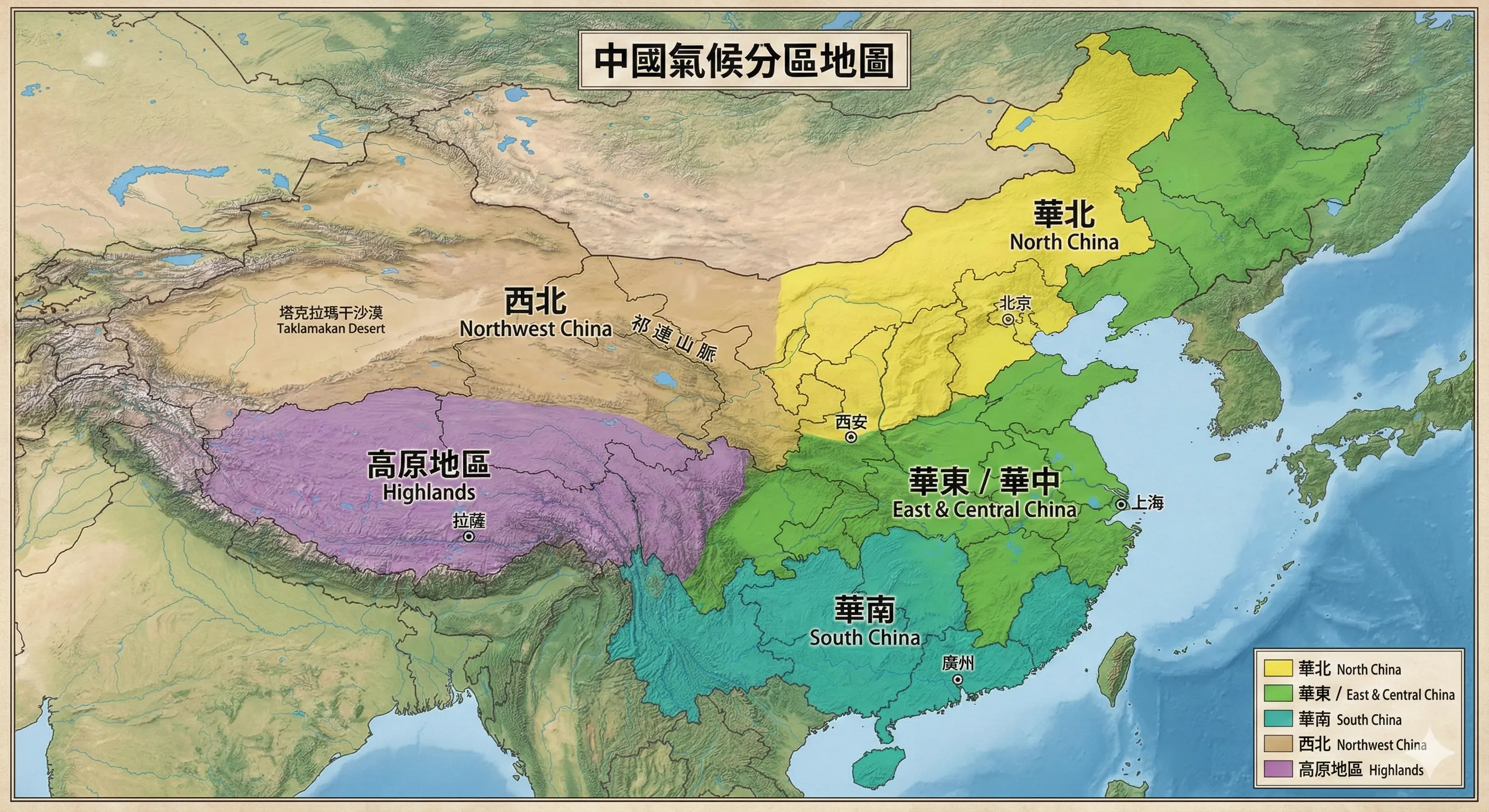
North China (Beijing, Xi'an, Inner Mongolia)
● Climate: Temperate Continental.
● The Reality: Summers are hot (often 30°C+) and surprisingly humid due to the monsoon. Winters are bitterly cold, dry, and windy.
● Best Time to Visit: September–October (The "Golden Autumn").
● Travel Tip: Spring (March-April) can see occasional sandstorms from the Gobi Desert. Monitor the China Meteorological Administration (CMA) for air quality alarms during these months.
East & Central China (Shanghai, Hangzhou, Wuhan)
● Climate: Subtropical Monsoon.
● The Reality: Defined by four distinct seasons. The "Plum Rain" season (Meiyu) brings persistent drizzle in June and early July. Summers are sweltering; winters are damp and chilly (0°C–5°C).
● Best Time to Visit: April–May (Spring blossoms) or October–November.
South China (Guangzhou, Guilin, Hong Kong, Hainan)
● Climate: Tropical / Subtropical.
● The Reality: Green and humid year-round. Winter is mild and pleasant (15°C–20°C), making it a popular escape for Northerners.
● Warning: The Typhoon season generally peaks between July and September. Travelers should monitor regional observatories for maritime alarms.
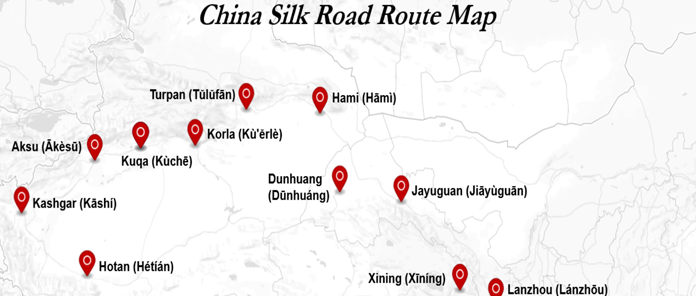
Northwest China (The Silk Road: Dunhuang, Kashgar, Urumqi)
● Climate: Arid Continental / Desert.
● The Reality: This is a land of extremes. Rainfall is scarce. The defining feature is the Diurnal Temperature Range—the difference between day and night temperatures can exceed 15°C–20°C.
● The Challenge: In summer, ground temperatures in places like the Flaming Mountains (Turpan) can be scorching, while nights in the desert require a fleece jacket.
● Strategy: This region requires a "layering" strategy for clothing. It is the driest part of China, making it an excellent destination when the rest of the country is in the rainy season.
The Highlands (Qinghai & Xizang(Tibet))
● Climate: Alpine / Plateau.
● The Reality: High altitude means thin air and intense UV radiation. Temperatures drop significantly after sunset.
The "March Advantage" for Western China
While March is often rainy in Shanghai and Guilin, it is a "secret season" for the Silk Road.
● Dunhuang & The Desert: The bitter winter cold has receded, but the scorching summer heat hasn't arrived. Apricot blossoms begin to bloom in the oases.
● Crowd Control: You avoid the domestic tourism crush of the May holidays.
● Visibility: The crisp air offers some of the best visibility for photography in the Qilian Mountains.
Why Transport Mode Matters: The Climate Solution
Understanding the climate is one thing; navigating it is another. Crossing from the humid lowlands of Xi'an to the high-altitude plateaus of Qinghai and the arid deserts of Xinjiang involves traversing three distinct climate zones in a single trip.
The Challenge of Conventional Travel: Flying between these zones subjects the body to rapid pressure and temperature changes (e.g., landing in 3,000m altitude from sea level in 3 hours). Road travel, while scenic, exposes travelers to the harsh elements of the Gobi for hours on end.
The Rail Advantage: This is where luxury cultural rail journeys, such as the Silk Road Express, offer a distinct physiological advantage.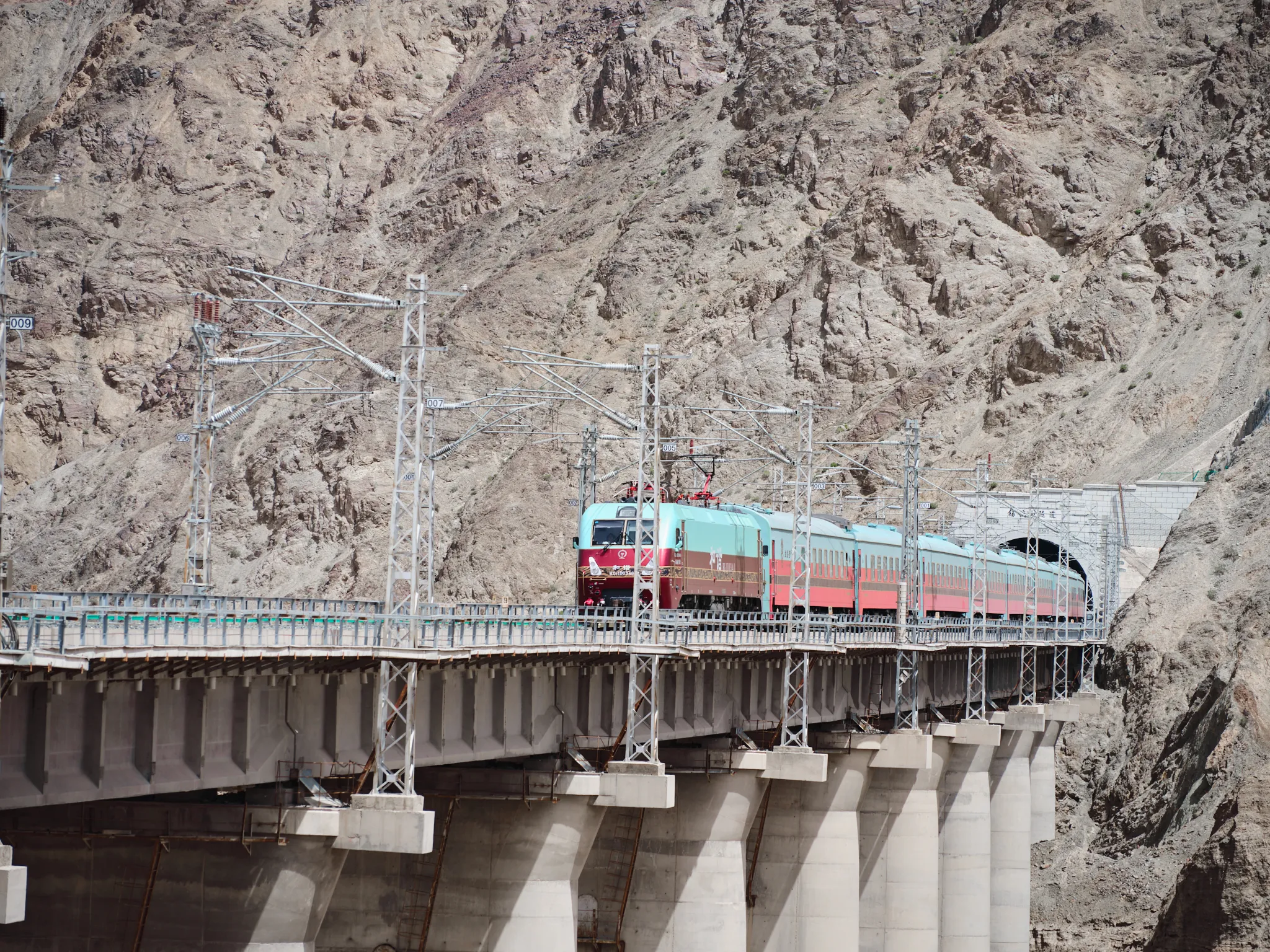
1. Acclimatization: The train ascends gradually from the plains to the plateau, allowing the body to adjust to the altitude naturally, reducing the risk of AMS compared to flying.
2. Climate Control: The desert climate is hostile—dusty, dry, and hot. A high-end train acts as a moving sanctuary, maintaining consistent humidity and temperature filtration regardless of the sandstorms or heatwaves outside.
3. Seamless Transition: You can watch the snow-capped Kunlun Mountains from a warm lounge car and step out into the Turpan warmth refreshed, rather than exhausted by the elements.
Summary
China's weather is not a single story; it is a collection of regional narratives. From the humid embrace of the Yangtze Delta to the crisp, arid clarity of the Hexi Corridor, the climate shapes the local culture as much as history does.
Mastering these seasonal rhythms is key to a comfortable journey. Ultimately, the best weather for travel isn't just about clear skies; it's about choosing the right environment to enjoy them. Whether you are chasing the spring blossoms in Nyingchi or the autumn gold in Dunhuang, preparation—and the right mode of travel—makes all the difference.