



The Origin of the Name “Silk Road”
The term "Silk Road" is a modern invention that captures one of history's most iconic networks of exchange. It was not used in ancient times but emerged as a scholarly label to describe long-distance trade and cultural connections across Eurasia.
How Did the Silk Road Get Its Name?
The name “Silk Road” did not exist in antiquity—it is a modern academic concept. The German geographer and explorer Ferdinand von Richthofen first introduced it in 1877. In his work China: Ergebnisse eigener Reisen und darauf gegründeter Studien (and specifically in a related 1877 publication on Central Asian routes), he used the German term Seidenstraße (literally "Silk Road," or sometimes in plural as Seidenstraßen).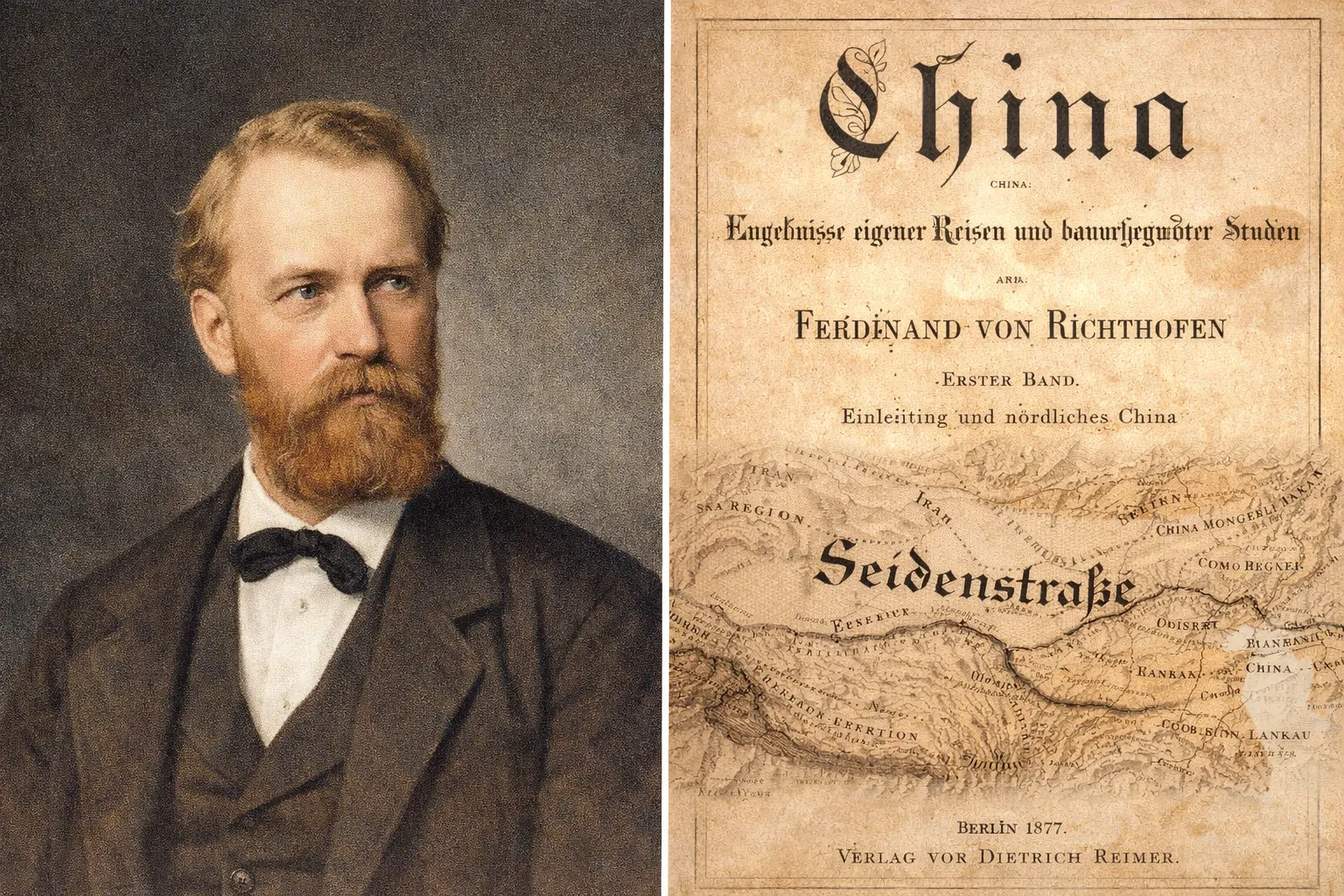
Richthofen, who had traveled extensively in China during the 1860s and 1870s, coined this from a geographical and economic perspective. He summarized the ancient trade networks linking China with Central Asia, the Middle East, and Europe as a cohesive system focused on the flow of goods, particularly silk. Importantly, he did not describe a single physical road but rather a conceptual network of routes shaped by commerce, not a literal highway.
This was a 19th-century scholarly innovation, reflecting European efforts to systematize knowledge of Asian geography and history during an era of exploration and imperialism.
Why Was Silk Chosen as the Name?
Why "silk" specifically, and not spices, gold, horses, or other traded items? Silk stood out as China's most distinctive and iconic export in the ancient world. From the Han Dynasty onward, Chinese silk was highly prized in the Roman Empire and Mediterranean regions, where it symbolized luxury, status, and exoticism—often more valuable than its weight in gold.
Roman writers described silk as coming from the mysterious "Seres" (the land of silk, referring to China), and its trade was among the earliest and most systematically recorded long-distance exchanges between East and West. While spices (via southern routes), precious metals, and animals were also traded, silk represented the quintessential symbol of this transcontinental connection.
The choice was symbolic rather than literal: "Silk" encapsulated not just a commodity but the broader exchange of technologies (like silk production secrets), ideas, and cultures that flowed along these routes. It highlighted the prestige and allure of Eastern goods in Western eyes, making it a fitting shorthand for the entire phenomenon.
Was the Silk Road a Single Road or Many Routes?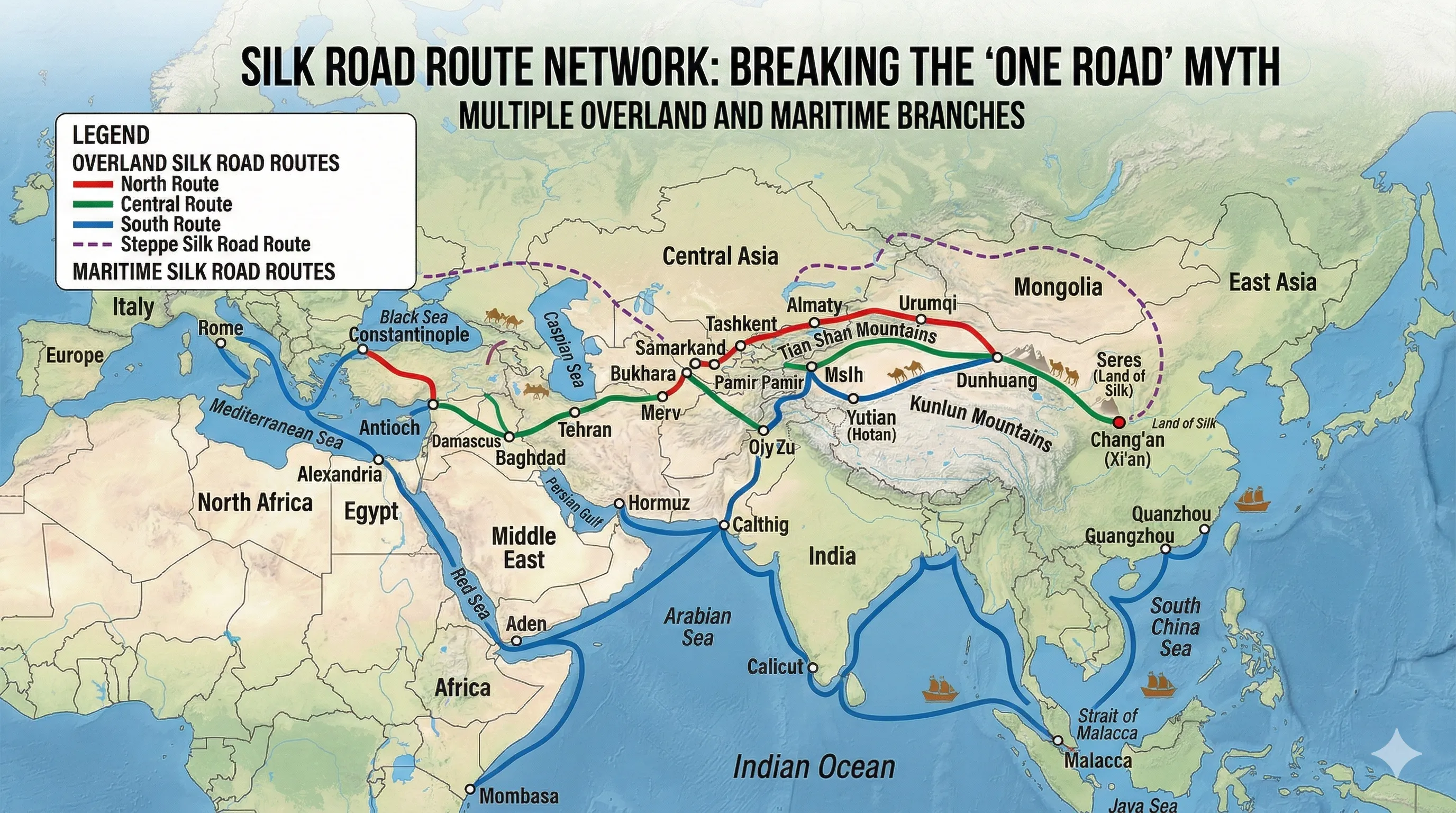
A common misconception is that the Silk Road was one continuous highway. In reality, it was never a single road but a vast, evolving network of overland and maritime trade corridors.
● Overland routes crisscrossed Central Asia, the Iranian Plateau, and into the Middle East and Europe, with key hubs like Samarkand, Bukhara, and Kashgar.
● Maritime routes (later termed the Maritime Silk Road) connected Chinese ports to Southeast Asia, India, the Persian Gulf, and East Africa.
These paths shifted over centuries due to political changes, wars, climate, and new technologies—rising and falling from the Han era (around 130 BCE) through the Mongol period and into the 15th century. Historians often prefer terms like "Silk Routes," "trade network," or "corridors" to emphasize this complexity and multiplicity, rather than implying a fixed path.
How Did the Name “Silk Road” Become Widely Used?
Initially, "Seidenstraße" remained confined to German-speaking academic circles after Richthofen's 1877 introduction. It gained traction slowly through geographical studies and explorations.
In the 20th century, it spread internationally:
● English-speaking scholars adopted and translated it.
● Explorers like Sven Hedin (who published a book titled The Silk Road in 1938) popularized it through travelogues and public accounts.
● Publications, museums, and historical narratives further embedded the term.
By the mid-to-late 20th century, "Silk Road" became the globally recognized standard—thanks to academic acceptance, popular histories, and cultural references. It was a process of gradual dissemination and solidification, not an overnight adoption.
Did Ancient People Call It the Silk Road?
No, ancient peoples did not use the term "Silk Road" or any equivalent unified name.
● In China, routes to the west were often called "the roads to the Western Regions" or specific paths like those opened by Zhang Qian.
● Persians, Arabs, and Central Asians referred to segments by local names, focusing on their own portions (e.g., caravan routes through Sogdia or Persia).
● Romans knew of silk from distant "Seres" but had no overarching label for the full network.
Different civilizations viewed these connections piecemeal, through their own regional lenses. The "Silk Road" is a retrospective, modern construct that helps us understand the interconnected Eurasian history that ancient people experienced in fragments.
What Does the Silk Road Mean Today?
Today, the Silk Road transcends its origins as a trade label. It stands as a powerful symbol of cultural, religious, technological, and intellectual exchange across continents—facilitating the spread of Buddhism, Islam, paper-making, gunpowder, artistic motifs, and scientific knowledge.
The name endures because it evokes romance, mystery, and globalization's deep roots, reminding us of how interconnected the world has long been. In an era of modern initiatives like China's Belt and Road, it bridges past and present, illustrating enduring patterns of human connection across Eurasia. Far more than a historical footnote, the Silk Road reminds us that trade routes have always carried ideas as much as goods, shaping civilizations in profound ways.
Start Planning Your Silk Road Adventure
Ready to experience the legacy of the Silk Road firsthand? Begin your journey with luxury train travel that brings history to life in comfort and style.
● Visit Silk Road Express for exclusive luxury train journeys across iconic routes.
● Consult with travel specialists for the latest visa requirements, itineraries, and seamless logistics.
Your adventure on the ancient Silk Road begins now.