




Qingming Festival 2026: What It Is and Why Spring Is the Best Time to Travel the Silk Road
Every year in early April, China pauses.
For a few days, hundreds of millions of people return to their hometowns, visit the graves of their ancestors, and mark the arrival of spring with one of the oldest continuous traditions in human history. Qingming Festival — sometimes translated as Tomb Sweeping Day, though that translation captures only half of its meaning — is both a moment of remembrance and a celebration of renewal. It is the day China steps fully into spring.
For international travellers, Qingming is more than a cultural event to observe. It marks the beginning of one of the finest travel windows in the Chinese calendar — a period when the weather across the country's vast northwest turns mild, the desert light softens, and the Silk Road corridor becomes, for a few weeks each year, perhaps the most beautiful it will be all year.
What Is Qingming Festival?
Qingming Festival (清明節) is one of the oldest and most widely observed traditional festivals in Chinese culture, with roots stretching back over 2,500 years to the Zhou Dynasty. Unlike many Chinese festivals, which follow the lunar calendar, Qingming falls on a fixed point in the solar calendar — typically April 4th or 5th — making it one of the few traditional holidays that aligns consistently with the Western calendar.
The festival carries two distinct but intertwined meanings, and understanding both helps explain why it holds such an enduring place in Chinese cultural life.
The first is ancestral remembrance. Qingming is the occasion on which families visit the graves of their ancestors to clean the tombs, make offerings of food and incense, and pay their respects to those who came before. This practice, known as 掃墓 (sǎo mù, literally "tomb sweeping"), is observed across China and among Chinese communities worldwide. It is a deeply rooted expression of the Confucian values of filial piety and gratitude that have shaped Chinese social life for millennia.
The second meaning is equally important, though less widely known outside China: Qingming is also the traditional festival of spring outings. The Chinese term 踏青 (tà qīng) — literally "treading on the green" — describes the custom of going out into nature to appreciate the blossoming of spring. As documented in China's intangible cultural heritage traditions, this practice of seasonal attunement to nature has shaped Chinese culture's relationship with landscape and travel for centuries. Historically, Qingming was as much a festival of kite-flying, picnicking and walking through blossoming orchards as it was of tomb sweeping.
It is this dual nature — honouring the past while embracing the present season — that gives Qingming its particular emotional quality. It is a day that looks backward and forward simultaneously.
Qingming Festival 2026: Dates and Public Holiday
In 2026, Qingming Festival falls on Sunday, April 5th.
As a public holiday in mainland China, Qingming typically generates a three-day holiday period (April 4th–6th in 2026), during which domestic travel surges significantly. Train stations and airports in major cities experience some of their highest passenger volumes of the year, and popular tourist destinations in eastern China become extremely crowded.
For international travellers planning a trip to China around this period, the practical implication is straightforward: book accommodation and transportation well in advance, and consider timing your visit to arrive slightly before or after the peak holiday dates. The northwest of China — including the Silk Road corridor through Gansu and Xinjiang — sees far less of the holiday congestion that affects coastal and central destinations, making it a particularly attractive option for independent and culturally-minded travellers.
Why Qingming Season Is Perfect for Travelling China
The timing of Qingming is not coincidental. It falls at the precise point in the solar year — around the 15th degree of the sun's ecliptic longitude — when temperatures across most of China become genuinely comfortable after winter, but before the heat and humidity of summer set in.
For travellers, this translates into some of the year's most pleasant conditions across a wide range of destinations.
The weather is ideal across much of the country. Daytime temperatures in the northwest — across Gansu, Qinghai and Xinjiang — typically range from 12°C to 22°C in April, warm enough for comfortable outdoor exploration but cool enough to make long days of walking and sightseeing enjoyable. The extreme heat that makes summer travel in the Tarim Basin and Turpan genuinely challenging is still months away.
The light is exceptional. Spring light in the northwest of China has a quality that photographers and artists have long recognised: lower in angle than summer, warmer in colour temperature, and filtered through air that is cleaner after winter. The desert landscapes of the Silk Road — the red rock formations of Hami, the golden dunes of Dunhuang, the ancient mud-brick walls of Kashgar — are at their most photogenic in the soft, directional light of April mornings and late afternoons.
The crowds are manageable. While Qingming generates significant travel within China, the movement is largely domestic and concentrated on a few popular destinations. The Silk Road corridor — which requires more time and planning to visit than a quick weekend getaway — attracts a more deliberate type of traveller, and the volume of visitors in April is a fraction of what it will be during the summer peak.
Nature is transitioning visibly. The Qinghai Plateau, still dusted with snow at higher elevations in early April, begins to soften into the green of spring grasslands. The oasis cities along the Silk Road — Kashgar, Kucha, Dunhuang — are surrounded by fruit orchards that bloom in April, adding colour and fragrance to landscapes that spend most of the year in various shades of brown and gold.
The Silk Road in Spring: A Journey Through Ancient China
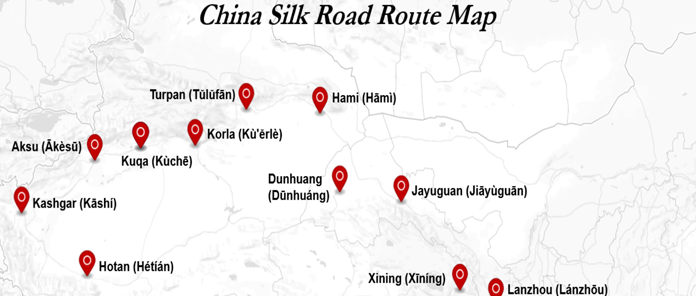
The Silk Road corridor — stretching from the Tibetan Plateau gateway of Xining westward through Gansu, across the Tarim Basin, and into the ancient city of Kashgar at China's western extremity — is, in many respects, best experienced in spring.
This is the season when the Qinghai Plateau shows its most benevolent face: the grasslands around Qinghai Lake begin to turn green, the Kumbum Monastery in Xining (塔爾寺) fills with the sound of monks' prayers in the clear spring air, and the high-altitude landscape carries the particular quality of openness that only comes after winter's release.
Further west, the Gobi and Taklamakan deserts in April have not yet reached their brutal summer temperatures. The Yardang geological formations of Hami — wind-sculpted rock columns that rise from the desert floor in shades of reddish-brown and dark grey — glow with particular intensity in the low-angled spring light. The ancient Buddhist cave complexes of Kucha (Kuqa), whose murals predate those of Dunhuang by several centuries, are best visited in the comfortable temperatures of spring rather than the punishing heat of July.
And Kashgar — at the western end of the corridor, where the Silk Road routes converged before pushing through the Pamir passes into Central Asia — is perhaps at its finest in spring. The old city's mud-brick architecture warms in the April sun; the Sunday livestock market fills with traders who have been largely confined by winter; the fruit trees in the surrounding oasis bloom in waves of white and pink blossom. This is the Kashgar that the Silk Road merchants would have known as they arrived after the long winter, grateful for warmth and the promise of trade.
Qingming and the Silk Road: A Cultural Connection
There is a connection between Qingming's spirit and the experience of travelling the Silk Road that goes deeper than seasonal coincidence.
Qingming is, at its core, a festival of memory and continuity — of honouring the accumulated experience of those who came before, and of understanding yourself as part of a longer story than your own lifetime. These are precisely the sensations that the Silk Road, more than almost any other travel destination, consistently produces in those who journey through it.
Walking through Kashgar's old city, you are moving through streets that have been continuously inhabited for over two thousand years. The mud-brick architecture around you uses building techniques that predate the Tang Dynasty. The call to prayer from the Id Kah Mosque has been marking the passage of time in this square for centuries. As UNESCO's Silk Roads Programme notes, these routes were among the most important channels of cultural memory and transmission in human history — a living archive of the civilisations that built and maintained them.
The spring outing tradition of Qingming — 踏青, the practice of going out into the world to observe it coming back to life — finds its natural extension in a journey along these ancient routes. You are not simply sightseeing. You are, in some small way, participating in the same impulse that sent merchants, pilgrims and scholars westward through the Pamir passes for a thousand years: the desire to see what lies beyond the familiar, and to return with something new.
Top Silk Road Destinations to Visit Around Qingming
Xining (西寧) — Gateway to the Tibetan Plateau
Xining in April is a city emerging from winter with particular energy. The Kumbum Monastery (塔爾寺) — one of the six great monasteries of Tibetan Buddhism's Gelug school — is at its most atmospheric in spring, when the religious calendar brings monks and pilgrims together in numbers that create a genuine sense of living tradition. The surrounding Qinghai Plateau begins its transition to green in April, and Qinghai Lake — China's largest inland lake — is surrounded by early-blooming rapeseed fields that will reach their full gold by late spring.
Dunhuang (敦煌) — Desert Oasis and Buddhist Art Treasury
April is one of the finest months to visit the Mogao Caves — the extraordinary complex of 492 Buddhist cave temples whose murals represent one of humanity's greatest artistic achievements. The UNESCO World Heritage Site operates timed entry tickets that sell out well in advance during summer; April visitors face far less competition for slots. The surrounding desert landscape — including the singing sand dunes of Mingsha Mountain and the miraculous Crescent Moon Spring — is best explored in the comfortable temperatures of spring rather than the 40°C+ heat of July.
Kucha / Kuqa (庫車) — The Ancient Kingdom of Kucha
One of the most undervisited stops on the Silk Road, Kucha was once the capital of a powerful Buddhist kingdom whose artistic traditions influenced cave painting as far east as Dunhuang. The Kizil Caves — whose murals predate those of Dunhuang by several centuries — are best visited in spring, when the light outside the caves and the temperature inside create optimal conditions for appreciating the extraordinary paintings within.
Kashgar (喀什) — Where the Silk Road Converges
Kashgar in spring is a city reawakening. The winter months are quiet; April brings the old city back to full life, with the Sunday livestock market resuming its full scale, the fruit orchards surrounding the oasis coming into bloom, and the Pamir road to Tashkurgan and Karakul Lake becoming passable again after winter. For photographers, the April light on Kashgar's old city — warm, directional and filtered by the clear dry air of the Tarim Basin — is exceptional.
Best Time to Visit the Silk Road: A Seasonal Overview
Season | Conditions | Recommended? |
Spring (Apr–May) | Mild, clear, excellent light | ✅ Highly recommended |
Summer (Jun–Aug) | Extreme heat in desert regions | ⚠️ Manageable with planning |
Autumn (Sep–Oct) | Ideal temperatures, golden poplar season | ✅ Highly recommended |
Winter (Nov–Mar) | Cold, some routes restricted | ❌ For experienced travellers only |
Spring and autumn are the two peak seasons for Silk Road travel, and for good reason. Of the two, spring offers something autumn cannot: the sense of emergence, of a landscape and a culture stepping back into full activity after months of winter quiet.
Anticipating Spring: The Silk Road Express Returns on April 30th
The practical challenge of Silk Road travel has always been the same: the distances are vast, the terrain is demanding, and the logistics require considerable planning. As Qingming Festival awakens the landscape across China in early April, it serves as the perfect signal to start planning your ultimate spring journey.
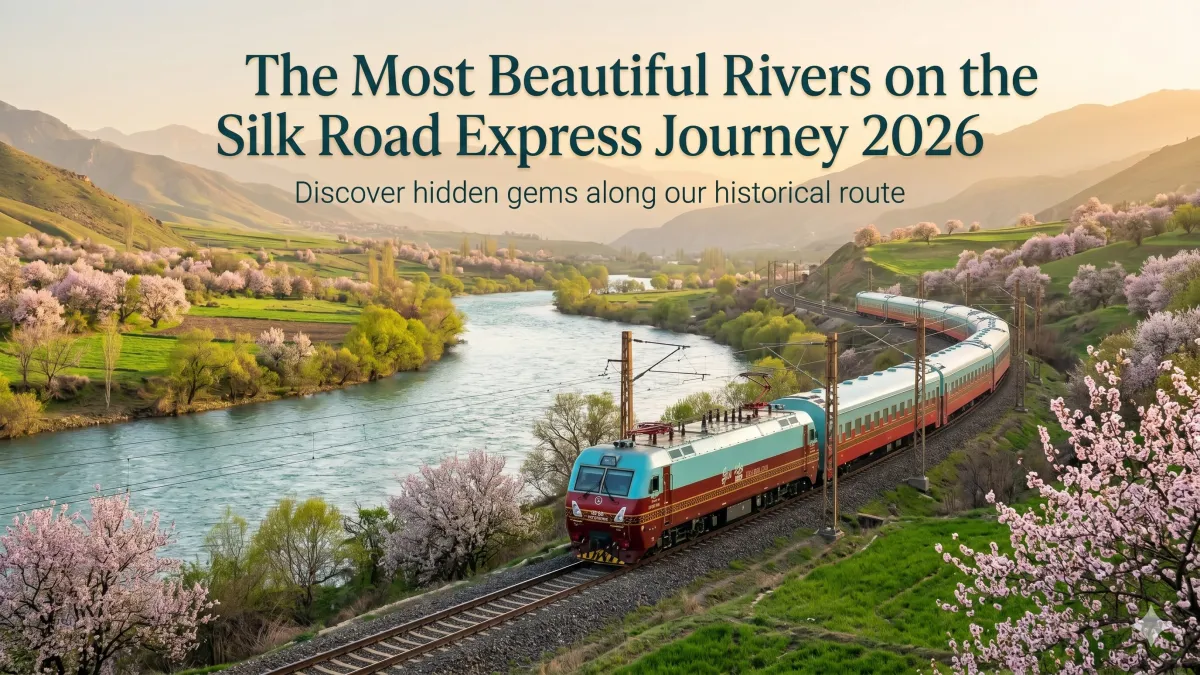
For travellers who want to experience the full depth of the corridor precisely when the weather hits its absolute peak, the Silk Road Express by Train of Glamour begins its highly anticipated spring season with its first departure on April 30th. Waiting until late April ensures the extreme temperature drops of early spring have passed, offering the most stable and comfortable climate for the 5-day Xining to Dunhuang itinerary.
This luxury private train traces a breathtaking route through western China, departing from Xining and heading west past the stunning shores of Qinghai Lake. It continues to Golmud, where travellers can admire the extraordinary landscape of the Qarhan Salt Lake — China's largest salt lake and the second largest in the world, often referred to as the "King of Salt Lakes" — with its vast crystalline salt flats shimmering under the open sky. The journey culminates in Dunhuang, with an immersive exploration of the Mogao Caves — the extraordinary complex of Buddhist cave temples whose murals represent one of humanity's greatest artistic treasures. This includes in-depth visits to the UNESCO World Heritage site, guided by expert cultural interpreters who bring the millennia-old murals and ures to life.
Throughout the journey, expert cultural guides provide the historical and archaeological context that turns beautiful landscapes into genuinely understood places. A dedicated tourism ambassador and professional photographer accompany each group from departure to return.
The train itself resolves the central logistical challenge of Silk Road travel: it moves you efficiently across the vast distances between destinations while keeping you connected to the landscape throughout. The Gobi Desert, the Tianshan foothills, the Tarim Basin — all unfold through large cabin windows as you travel, turning what would otherwise be exhausting road transfers into some of the journey's most memorable hours.
FAQ
Q: When is Qingming Festival 2026?
Qingming Festival 2026 falls on Sunday, April 5th. The public holiday period in mainland China runs from April 4th to 6th, creating a three-day weekend.
Q: Does the luxury Silk Road Express run exactly during the Qingming holiday?
A: The early April Qingming period is traditionally a time for domestic family gatherings and local spring outings. To provide the absolute best weather conditions and avoid the domestic holiday rush, the luxury Silk Road Express by Train of Glamour officially begins its spring season with its first departure on April 30th. Planning your booking during Qingming ensures your spot for this highly sought-after late April departure.
Q: Is Qingming Festival a public holiday in China?
Yes. Qingming is one of China's statutory public holidays, generating a three-day holiday period. During this time, domestic travel within China is extremely high, and popular tourist destinations become very crowded. The Silk Road corridor in the northwest experiences significantly less congestion than coastal and central destinations.
Q: What do people do during Qingming Festival?
Qingming has two main traditions: tomb sweeping (掃墓), in which families visit ancestral graves to clean them and make offerings; and spring outings (踏青), in which people go out into nature to appreciate the season. Other traditional activities include kite-flying, eating green rice balls (青團), and planting willow branches.
Q: Is spring a good time for foreign travellers to visit China?
April and May are among the best months to visit China for international travellers. The weather is mild across most of the country, the extreme summer heat has not yet arrived, and the natural landscape is at its most photogenic. The main consideration is that the early April holiday weekend generates high domestic travel volumes — planning your journey for late April or May perfectly avoids the congestion while capturing the best weather.
Q: Can foreign travellers participate in Qingming Festival activities?
Absolutely. The spring outing tradition (踏青) is accessible to all visitors — simply being in China's landscapes during this season means participating in the same impulse that has driven the festival for millennia.
The Road Has Always Called in Spring
Qingming asks us to remember the past and celebrate the present. It is a reminder that spring is here, and the road is open.
While the early days of April are for local spring outings and ancestral remembrance, they serve as the perfect catalyst to secure your place for the true start of the Silk Road travel season. With the Silk Road Express making its grand spring debut on April 30th, there is no better way to step forward into the season. A journey along the ancient routes, approached slowly and in ultimate luxury, does exactly what spring intended: it brings you back to life.