




Why Winter is the Secret Best Season to Visit the Silk Road
You book your trip for July. Everyone does. That is the mistake.
Most people assume the Silk Road is only a summer destination. They imagine heat, camels, and sun. They are right about the geography, but they are wrong about the timing.
Summer brings crowds. It brings noise. It brings heat that drains your energy.
Winter is different. Winter is the secret.
When you visit Gansu Province in January or December, you don't just see the sites. You feel them. The crowds vanish. The desert falls silent. The history feels older, sharper, and more personal.
This is your guide to the off-season. We will show you why the cold months offer the warmest memories.
The Silence of the Singing Sands
In August, Dunhuang Gansu is packed. You stand in line to climb a sand dune. You hear megaphones and chatter. It kills the mood.
In winter, the Mingsha Shan (Singing Sand Dunes) are empty.
You can climb to the top of a dune and hear nothing but the wind. If you are lucky, you see snow.
Snow on the desert is rare and beautiful. Golden sand meets white powder. It creates a visual contrast that photographers dream about. You don’t have to edit these photos. The landscape does the work for you.
You can ride a camel without waiting. You can watch the sunset over the Crescent Moon Spring in total peace. This solitude allows you to actually connect with the history of the Silk Road.
The Mogao Caves: A Private Audience
The Mogao Grottoes(Mogao Caves) are fragile. In summer, thousands of people visit daily. The carbon dioxide from breath damages the murals. Because of this, guides rush you. You get ten minutes in a cave, and then you move.
Winter changes the rules.
Visitor numbers drop drastically. The guides relax. They often let you stay longer in each cave. They answer your questions. You aren't just cattle moving through a chute.
You get to look closely at the flying apsaras painted on the walls. You can stare at the Buddha statues without someone bumping into you.
For art lovers, this is the only way to see Dunhuang Gansu. You get a private audience with a thousand years of history.
The Hexi Corridor in White
The journey through Gansu Province is visually stunning in winter. The Qilian Mountains run alongside the train tracks. In summer, they have snow only at the peaks.
In winter, the snow comes down to the foothills.
You look out the window and see a world of red rock and white snow. The Danxia Rainbow Mountains look more dramatic. The red sandstone pops against the grey winter sky and the white ground.
It feels like you are traveling through an oil painting.
This visual drama extends west toward Xinjiang. The stark, rugged beauty of the northwest is amplified by the cold. It feels wilder. It feels like the frontier.
Authentic Culture and Comfort Food
Cold weather makes hot food taste better. This is a scientific fact of travel.
The food along the Silk Road is heavy and hearty. It was designed for winters. In Lanzhou, a bowl of hot beef noodles warms your soul. In Xinjiang, roasted lamb skewers keep you fueled.
In summer, eating hot noodle soup in 35℃ heat is a chore. In winter, it is a necessity.
Locals are also less busy. Shop owners in the bazaars have time to talk. You can sit in a tea house and interact with people. You stop being a tourist and start being a guest. The hospitality in the West is legendary, but it shines brightest when it is cold outside.
The Logistics: Why Experts Choose Winter
You might worry about the cold. You might think, "Is it safe to Travel to China in winter?"
A smart China Travel Agency will give you the inside scoop. They know that summer logistics are stressful. Flights are delayed by thunderstorms. Hotels are fully booked.
Winter is stable. The air is dry and crisp.
The key is how you travel. If you take buses or drive, winter roads can be tricky. But if you travel by rail, the snow doesn't matter.
Trains plow through the weather. You sit inside a warm cabin with a hot tea. You watch the frozen world go by. You don't have to brave the elements until you want to.
Lower Costs, Higher Value
Luxury travel is rarely "cheap," but winter offers better value.
In peak season, hotels in Dunhuang Gansu charge a premium. Availability is scarce. You pay top dollar for a standard room.
In the off-season, you get the best suites. You get the best tables in restaurants. You get the undivided attention of your guides.
You are paying for exclusivity. In summer, money can't buy silence. In winter, the silence is free. You get a VIP experience simply by choosing the right month.
Conclusion:
Don't let the thermometer scare you. Modern gear keeps you warm. Modern trains keep you moving.
The Silk Road was an active trade route all year round. Ancient merchants didn't stop for snow. They knew the beauty of the winter crossing.
You can see the standard sights with the summer crowds. Or, you can see the white dunes, the quiet caves, and the true face of the West.
Be brave. Pack a coat. Go when others stay home.
Travel Recommendations for China
Are you ready to see the ancient world in a new light? Do you want to experience the snow-capped dunes without the hassle of icy roads?
We recommend exploring the West by luxury rail. It is the safest, warmest way to navigate the winter landscape. You sleep in comfort and wake up at the gates of history.
Train of Glamour: Travel Without Compromise.
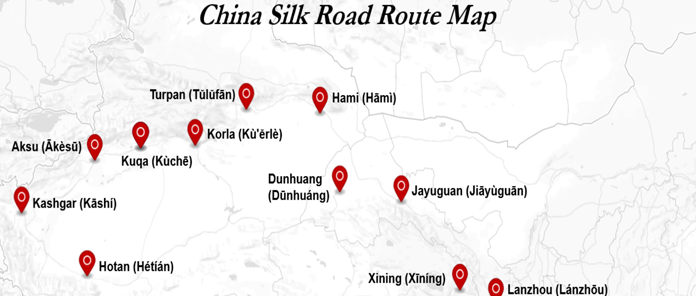
Discover our recommended winter itineraries for Gansu Province and the Silk Road. See the route map and learn how we turn the cold season into the cozy season.
FAQs:
Is it too cold to visit Dunhuang Gansu in winter?
It is cold, but dry. Temperatures drop below freezing, but there is very little wind or dampness. With a good coat and thermal layers, exploring the caves and dunes is very comfortable.
Are the Mogao Caves open in winter?
Yes, they are open year-round. In fact, winter visitors often get access to "Special Caves" that might be closed or too crowded during the peak summer months.
Does snow affect Travel to China trains in the West?
Rarely. China's rail infrastructure is built for all weather. While flights might be canceled due to snow, trains are the most reliable way to keep your itinerary on track.
Is Xinjiang accessible in winter?
Yes. While some remote mountain roads may close, the major Silk Road cities are fully open. The winter scenery in the region is spectacular and distinct from the rest of China.
What should I pack for a winter Silk Road trip?
Bring layers. You need a windproof outer shell, a down jacket, and thermal base layers. Good walking boots with grip are essential for walking on snowy dunes or icy paths.